AI Time Savings for Content Marketing Teams Weekly
Three hours or 250? Both numbers are real when it comes to AI time savings for content teams. Which one applies to you depends on a single variable almost no one measures: your team's AI maturity.
Georg Singer··16 min read
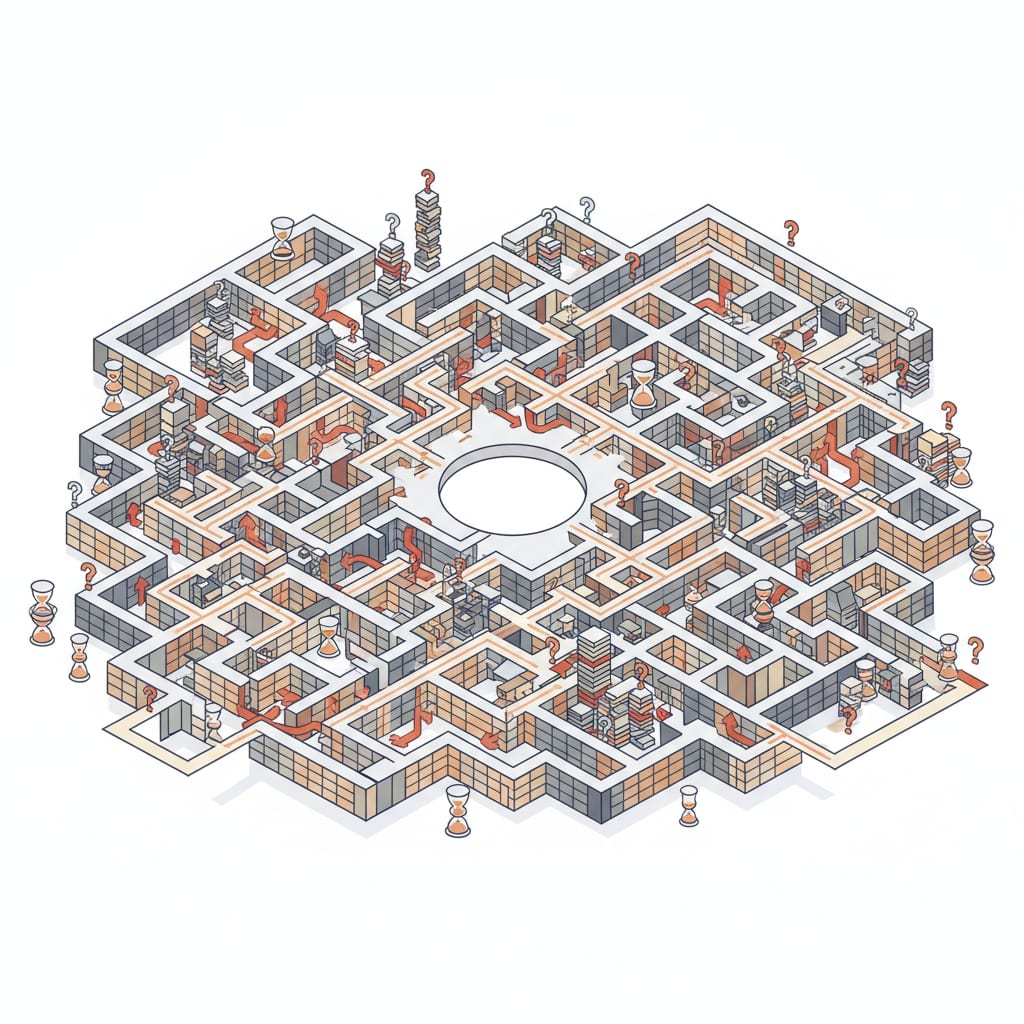
Two wildly different numbers are flying around the marketing world right now. One says AI saves content teams just three hours a week (OnlineMarketing.de). The other? A jaw-dropping 250 hours saved per week–that"s the number Vizient, a US healthcare giant, reported after deploying AI agents (State of AI in Marketing Report 2025, CoSchedule).
Both stats are accurate. Both are also meaningless–unless you know where your team stands on the AI maturity curve.
Here"s the real problem: most articles just drop these numbers side by side, with zero context. A team using ChatGPT for quick text fixes and an enterprise running fully automated AI agent pipelines are not even tracking the same thing. Yet both call it "AI time savings."
So, how much time will AI actually save your content marketing team? That depends on a single variable almost nobody measures: your team"s AI maturity.
TL;DR: The AI Time Savings Ladder for Content Teams
According to the data, Level 1 (Chat-based AI, single prompts) saves 1–3 hours per week, which is confirmed by the OnlineMarketing.de study and represents the initial adoption phase where AI is used for basic tasks. For Level 3 (fully autonomous agent pipelines), enterprise cases like Vizient demonstrate 250 hours per week overall and Adore Me shows 20 hours reduced to 20 minutes per process, indicating 10–20+ hours saved per week at this advanced stage. A realistic savings for a 5-person team 12 months in is 8–12 hours per week after steady implementation. The biggest time lever, research automation, which accounts for 35–40% of the workload, saves 3–4 hours per article. An absolute requirement for these savings is process documentation before tools, as undocumented workflows cannot be automated.
Myth #1: "AI Barely Saves Any Time–Just 3 Hours Per Week, Studies Say"
Let"s get real: this myth comes from a very specific place. Both marconomy.de and OnlineMarketing.de cite a survey showing teams save an average of about three hours a week thanks to AI. Skeptics–especially on X–use this stat to say the AI hype is overblown. One user nailed the sentiment:
"Tried it. Doesn"t work. Spreadsheets are unbeatable–sorry, nerds." –X, Score 1,362
Honestly? That skepticism is totally valid–for this kind of AI use.
Here"s the catch: The "3 hours" study is measuring the wrong use case. It"s looking at teams who use AI like a chat tool: type a prompt, get an answer, then spend time fixing the output. That isn"t true AI agent work–it"s just a slightly faster text editor.
There"s a hard automation ceiling here. No matter how many prompts you send, you"ll hit a point where extra AI simply doesn"t save you more time. Why? Because the more output you generate, the more review and fixing it needs. For most content teams, that cap is around 2–4 hours saved per week.
So why is this myth so sticky? Because most teams really are still at this basic level. The study is methodologically sound–it just measures the starting line, not the finish line. In other words: the "average" is just today"s reality, not the actual potential.
But what about the other extreme? Let"s look at those "15+ hours saved" claims.
Myth #2: "AI Agents Will Instantly Save Your Team 15+ Hours Every Week"
If you"ve browsed LinkedIn or vendor case studies, you"ve seen the bold claims: "Adore Me slashed a 20-hour content process down to 20 minutes!" (CoSchedule State of AI in Marketing 2025). Sounds like magic, right?
Then there"s a 5-person content team in Munich who tries the same thing–and after a month, they"re barely saving three hours a week, if that.
Feels like someone"s lying. But they"re not.
Here"s what"s really going on: Vendor case studies focus on best-case customers. These are teams with 6–12 months of automation experience, dedicated content ops people, and–most importantly–fully documented workflows. Vizient"s 250-hour number? That"s across an enterprise rollout with hundreds of users and multiple teams. The Adore Me story? It"s about a single, well-defined workflow–not their whole content operation.
One workflow specialist put it like this on X:
"I built 31 n8n workflows that replace the most expensive SaaS tools companies are still paying for." –X, Score 550
What he didn"t mention: months of experience, documented processes, and a crystal-clear understanding of his own workflow. Newbies see that number and think, "I"ll have that next week!"–missing all the groundwork.
My experience: Content teams who start with sky-high expectations quit after the first month. Result? Back to square one, even more skeptical, and less likely to automate in the future. The hype actually hurts real adoption.
So why does this myth keep coming up? Because those vendor claims aren"t lies–they"re just using the wrong starting point. "15 hours saved" is real, just not for your team in month one.
If you want to know what"s truly possible for your team, you need to find your place on the AI maturity ladder.
The AI Maturity Model: Where Does Your Team Stand?
What"s the real difference between dabbling with AI and running a fully automated pipeline? It"s all about AI maturity–how deeply AI tools are woven into your content production process.
Here"s how it breaks down:
Level 1: Single prompts, manual review at every step (think: ChatGPT one-offs).
Level 2: Semi-automated workflows–tools like Make or n8n handle parts of the process, but you still need to trigger them manually.
Level 3: Autonomous agent pipelines–research, briefing, and draft flow through without human intervention, except at key checkpoints.
Quick definition: An AI agent in content marketing is software that can execute multiple steps on its own. Unlike chat tools, agents can call external APIs, process intermediate results, and make decisions within set parameters.
The Three Levels of Content Team AI Maturity
| Level 1 – Prompt Users | Level 2 – Workflow Automators | Level 3 – Agent Orchestrators | |
|---|---|---|---|
| Description | AI as a text helper: copy-editing, first drafts, one-off prompts | Make/n8n connects tools, research is semi-automated | Multi-step pipelines run autonomously: Research → Brief → Draft → Critique |
| Typical Tools | ChatGPT, Claude Chat, Jasper | Make + GPT API, n8n + Notion integration | Custom agent systems, orchestrated LLMs with tool calls |
| Weekly Time Savings | 1–3 hours | 4–8 hours | 10–20+ hours |
| Requirements | Just an account | Documented workflows, basic API know-how | Fully documented end-to-end processes, dedicated workflow owner |
| Next Step | Document a process, then automate it | Set up research aggregation as your first agent | Refine human review gates, add critique loops |
Now, you might be wondering: how fast can you move from Level 1 to Level 3? Here"s a realistic timeline.
How Long Does It Take to Reach Level 3 AI Maturity?
Expect about 3–6 months:
- 1 month: Document your main processes–step by step, with no gaps.
- 1–2 months: Implement workflows using Make or n8n, connecting your tools.
- 1–3 months: Integrate agents, fine-tune, and troubleshoot until autonomous.
Teams that skip documentation always end up bouncing back to Level 1 after 2–3 months–frustrated and no further ahead.
Here"s the kicker: Marketing teams spend an average of 14.5 hours per week on data management and production overhead, according to a global Treasure Data survey. That"s the exact chunk Level 3 automation is designed to eliminate.
Let"s get even more concrete. Which of these scenarios sounds like your team?
Three Scenarios–Which One Is You?
Scenario A: The Prompt Team (Level 1) Four people, B2B SaaS. Everyone uses ChatGPT for first drafts, but each has their own system–nothing"s documented. The content manager hand-edits every AI output because the brand voice isn"t consistent. Time saved: 2–3 hours per week for the whole team. This is exactly what the German study measures.
Scenario B: The Workflow Team (Level 2) Same team, six months later. Now there"s an n8n workflow aggregating RSS feeds and social signals for editorial planning. Briefings are generated semi-automatically from research. Still, each step needs a manual trigger–but the annoying tool-hopping is gone. Time saved: 5–7 hours per week.
Scenario C: The Agent Team (Level 3) One year in. The research pipeline is fully autonomous: drop in a URL, the system analyzes the product, generates hypotheses and questions, researches competitors, creates a brief, and drafts the article. Human review only at key points. Time saved: 12–18 hours per week.
Quick Self-Test: Where"s Your Team?
- How many workflows run fully automatically, no human trigger needed?
- Are you using AI agents (multi-step, autonomous systems) or just chat tools (single prompts)?
- Are your key content processes written down–so a newcomer could follow them?
- Does your team have someone (even part-time) responsible for workflow management?
- Do you track time spent per content phase: research, brief, draft, review?
Three or more "no" answers? You"re at Level 1. Two "no" answers? You"re working on Level 2. Zero or one "no"? You"re closing in on Level 3.
Now, let"s talk about the biggest time wasters hiding in plain sight.
SwiftRun automates repetitive workflows with AI agents – so your team can focus on what matters.
Myth #3: "If You Use AI, You"re Saving Time"–The Hidden Time Sinks
This is the most dangerous myth, because it sounds true. AI spits out text faster than any human–so using it should always save you time, right?
Not so fast.
A seasoned SEO expert described the real driver of time savings on X:
"With the right infrastructure–keyword data API, Search Console integration, structured data warehouse–efficiency gains aren"t hours, they"re days." –X, Score 1,259
In other words: it"s not about making writing faster. The truly massive gains come from ditching the overhead of manual data gathering.
Why Research Automation Beats Any Writing Tool
Here"s the breakdown: Research and aggregation eat up 35–40% of the content production workload. Drafting? Just 25–30%. A research agent that scans Reddit, Google News, and industry publications at once can save you 3–4 hours per article. Writing tools only chip away at the smaller chunk.
| Phase | Time Share | AI Leverage |
|---|---|---|
| Research & Aggregation | 35–40% | High–directly automatable |
| Briefing | 15–20% | High–can be generated from research |
| Drafting | 25–30% | Medium–needs brand voice training |
| Review | 15–20% | Low–human gate remains |
AI agents mainly target the first two phases–meaning they can tackle 50–60% of your total workload. That"s a structural advantage over writing tools, which only nibble at the smallest block.
Let"s put this in perspective: According to Dataslayer / Glean 2025, teams spend 15 hours per week on manual reporting, but only 5 hours actually analyzing data. Once they automate, those numbers flip. The same logic applies to content: the overhead of aggregation is the biggest time drain, not the act of writing itself.
But there"s another trap most teams don"t see coming: 78% of marketing tools are siloed, and 60% of teams fail to connect their data stacks at all. If you build research automation on fragmented data sources, you"re building on quicksand.
Layer on top of that a looming burnout crisis–according to MechaBee (2025/2026), three out of four marketing team members report workplace burnout. For many, AI-powered time savings aren"t just about productivity–they"re about burnout prevention. The real energy drain isn"t creative work; it"s the endless reporting grind.
Four Ways AI Can Waste Time Instead of Saving It
Let"s get painfully specific:
1. Prompt engineering overhead. A badly written prompt makes AI output that takes longer to fix than starting from scratch. For beginners, prompt training costs you time before it saves any.
2. Missing brand voice. AI drafts without brand voice training need 30–60 minutes of editing for every single piece. That"s more than an experienced writer would spend starting from zero. The result? Your Martech stack grows, quality drops, and frustration skyrockets.
3. Automating undocumented processes. If you don"t have clear processes, you can"t automate them. An undocumented process plus AI equals faster chaos. AI only speeds up what already exists–if your foundation is shaky, your ROI is zero.
4. Automating the wrong thing first. The #1 mistake: teams automate writing (because it"s visible) instead of research and aggregation (the true time hogs). A research agent that pulls and summarizes Reddit, Google News, and trade pubs in parallel saves 3–4 hours per article–way more than any writing tool.
⚠️ Heads up: The most dangerous anti-pattern? Using AI for strategic decisions (What topics should we cover? What"s our USP?) instead of repetitive production tasks. Reviewing AI"s strategic output eats more time than just thinking it through yourself. AI agents eliminate production overhead–not vanity metrics. Knowing the difference is step one.
Ready to see what"s actually possible for a real-world team? Let"s run the numbers.
What Can a 5-Person Content Team Realistically Save With AI in 12 Months?
Let"s crunch the numbers. A 5-person content team that steadily implements Level 3 automation over 9–12 months can directly attack the following time sinks:
- Research & aggregation: 3–4 hours saved per article
- Brief creation from research data: 1–2 hours per article
- Social media adaptation: 1–2 hours per article
- Internal reporting summaries: 2–3 hours per week
If you"re publishing three articles a week and have full automation running, that"s a 15–18 hour weekly savings for the whole team.
ROI Calculation: Time Savings in Real Money
15 hours/week × €65/hour (all-in, incl. overhead)
× 48 working weeks
= €46,800 in freed-up capacity per year
That"s €46,800 in annual staff capacity you can use elsewhere–or three extra full-time content weeks per month. If your team is 10 people, double it. The assumptions: €65/hour all-in (wages + overhead), 48 working weeks, 15 hours/week as a conservative Level 3 estimate (based on SwiftRun pipeline data, Q1 2026).
Year 1 realistic expectation: 8–12 hours saved per week for a motivated team taking it step by step. Not 20 hours, not 3 hours.
The Phased Approach Is Everything
Months 1–3: Level 1 → 2 (Goal: 5 hours/week saved) Start with research automation. Since research is 35–40% of your workload, it"s your biggest ROI. Build a research agent that aggregates and summarizes relevant sources daily–before you automate writing.
"Order matters: connect tools first, then tackle the biggest workflow pain points."
–X, Score 720
Common mistake here: automating briefing or drafting before research. A weak brief means three bad drafts, all needing edits. Your pipeline is only as strong as its weakest phase.
Months 4–8: Level 2 → 3 (Goal: 10–15 hours/week saved) Automate briefing from research output. Then move to draft automation, but only after your brand voice is trained in. Define human review gates: Where does a person step in, and where can the system run on its own? Set them too rarely, and quality drops. Too often, and you lose your structural advantage.
Months 9–12: Optimize Level 3 (Goal: 15–25 hours/week, stable) Add critique loops: the system checks its own output against your quality criteria and iterates before a human sees anything. Automate reporting: Which articles perform best? What"s next in the pipeline? That"s when tracking the ROI of your AI content pipeline really matters.
SwiftRun mirrors exactly this approach: Research → Brief → Draft → Critique, with configurable human review gates. Teams without coding skills can build Level 3 automation step by step.
Want to build Level 3 automation without months of custom coding?
In a world where AI Overviews are tanking organic traffic–CTR for position #1 drops by 34% when AI Overviews appear–production speed isn"t a nice-to-have. SwiftRun covers the full production path: Research → Brief → Draft → Critique, with configurable human review gates. Non-technical teams can reach Level 3 in 4–8 weeks instead of 9–12 months. And once the pipeline is running, SwiftRun even answers the second big question: which of your articles actually converts–no GA4 skills or manual exports needed.
Myth #4: "There"s No Real Way to Measure AI Time Savings Anyway"
Actually, you can measure it. But as Digital Applied (2026) reports, only 21% of marketers can accurately measure content ROI–and Northbeam found 66% don"t measure it at all, or do it wrong. No baseline? You"re stuck in this pool, regardless of how much time AI saves you.
The real issue isn"t willingness–it"s lack of infrastructure. B2B Content Marketing Research 2025 (CMI) found that 65% of marketing leads need to prove their impact to secure budget. But with analytics spread across multiple platforms, measuring gets structurally hard. One practitioner described the daily grind on X:
"5 tabs. 1 CSV export. 1 spreadsheet. 20 mins. And the meeting is already over." –Dataslayer / X
If you can"t measure, you can"t justify more automation budget. That"s the vicious cycle keeping most teams stuck at Level 1.
Teams who use AI agents to reduce reporting overhead unlock capacity to generate leads from content–not just dashboards. Tracking time savings is itself an investment decision–no baseline, no argument for more budget.
The most common measurement mistake? Teams count number of articles instead of hours per article per phase. If AI increases your output but total hours stay flat, you"ll never see the time savings per article.
Checklist: 4-Week Baseline for Valid AI Measurement
- Weeks 1–4 (Baseline, no AI changes): Track time per phase per article: research, briefing, drafting, review, publishing
- Granularity: Not "3 hours for Article X," but "1.5h research + 0.5h brief + 0.8h draft + 0.2h review"
- Tool: Shared spreadsheet with date, article title, phase, minutes–that"s all you need
- Weeks 5–8 (Compare with AI tools): Track the same phases, same way
- Analysis: Calculate the difference per phase–research and briefing usually show the biggest wins
- Reporting: Hours saved × hourly rate = euro value of the time savings. That"s the language decision-makers understand.
- Cycle: Repeat your baseline every 6 months–your AI maturity will improve, so your starting point has to keep up
If you"ve got this data, you can plug it directly into any ROI calculator for AI automation in content teams. If not, you"re stuck guessing–or trusting whatever a vendor tells you.
So, What"s Actually True?
Three hours saved per week? Totally real–for teams using AI as a chat tool. 250 hours saved? Also real–for enterprises after a year of automation, with hundreds of users. Both numbers are true. Neither one is your team"s reality a week from now.
For a typical 5-person content team, here"s the truth: 8–12 hours saved per week after 12 months of focused implementation. But only if you have documented processes, research automation in place first, clear human review gates, and the discipline to measure rather than guess.
Jumping from Level 1 to Level 3 takes 3–6 months and starts with documenting your processes–not buying tools. AI will accelerate your workflows, but it can"t design them for you. The teams who get this build a structural advantage–in a market where content intelligence is what separates the teams who scale from the ones who stagnate. Teams who confuse ChatGPT prompts with "AI strategy" stay stuck at three hours, every time.
Want to see what it costs to build a 5-person AI-powered content team? Check out the full cost breakdown for a 5-person content team with AI agents.
Further reading: How do you know if your AI content pipeline really outperforms your manual process?
Related Articles:
- Self-Hosted vs Cloud AI: Which Setup Actually Makes Sense for Your Content Team?
- What is Retrieval-Augmented Generation (RAG) – and Does It Really Stop AI Hallucinations?
- Sequential vs Parallel AI Pipelines: How to Build Winning Content Automation
Ready to reclaim hours of your week for more strategic content work? See how SwiftRun.ai can help you unlock those AI-driven time savings for your team.
AI time savings content teamAI automation content marketingAI agents productivitycontent team AI ROIAI maturity marketing team
Related Articles
Content Marketing
Google AI Penalty: What To Do
Organic traffic dropped overnight after using AI content? Wait before deleting everything. Most teams act too fast–and make it worse. Here"s how to diagnose, audit, and recover step by step.
Jun 27, 2026·14 min read·Georg Singer

Content Marketing
AI Content Automation: Hidden Risks for Your Team
Full AI automation doesn't save you time – it just moves the risk. Busting five myths that could cost your content team dearly, plus what actually works if you want scalable, high-quality content.
Jun 27, 2026·13 min read·Georg Singer

Content Marketing
Retrieval-Augmented Generation: Stopping AI Hallucinations?
RAG can cut AI hallucinations by up to 70%–but it won"t wipe them out. Here"s what every content team needs to know about RAG"s new error class before a made-up stat lands you on Google"s front page.
Jun 20, 2026·16 min read·Georg Singer