Blog
Practical guides and insights on AI automation, workflow optimization, and scaling operations.

AI Pipelines vs. Agents: The Choice That Eats Your Margin
Running AI agents where a pipeline would do? You"re burning 90% more per task–often for no benefit. Let"s break down real agency costs, see side-by-side numbers, and give you a decision matrix that could save your profit margin.
What Is LangChain–and Do You Actually Need It to Build AI Agents?
LangChain boasts 95,000 GitHub stars, but for most agencies, it's the wrong starting point. Discover why this hyped AI framework can drain weeks from your team–while ready-made platforms solve your problems in days, and 55% of your clients consider switching agencies.

AI Assistants versus Autonomous Agents: Hidden Cost
63% of agency staff spend over 10 hours weekly on reporting–because chatbots and macros aren"t true AI agents. Here"s what sets real agents apart, how much time you"re losing, and why it matters for your agency"s margin.

ChatGPT vs. AI Agent Platforms: Consultant Guide
85% of freelancers already use AI–but 66% say it hasn"t raised their rates. Why? Most use assistants, not agents. Here"s the real difference, and what it means for your billable hours, admin load, and future as a consultant.
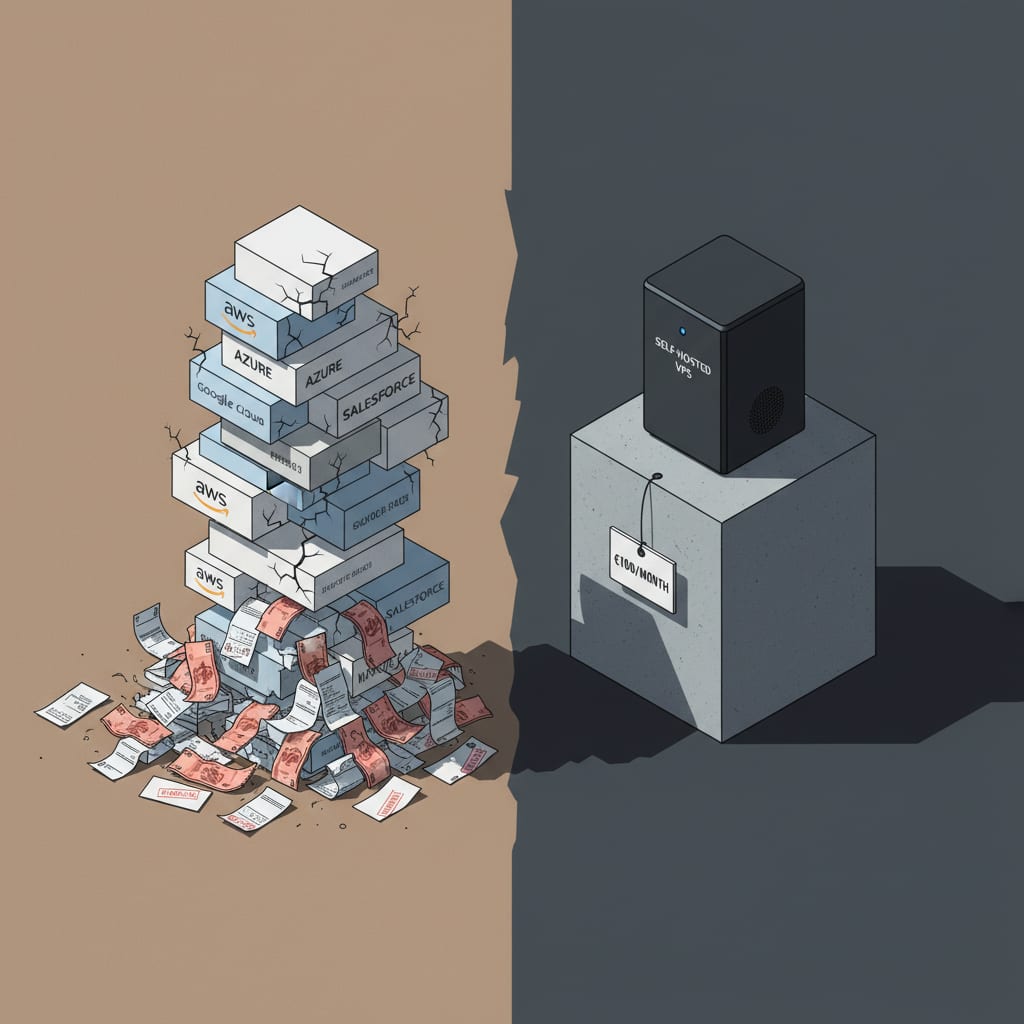
Self-Hosting AI: Worth It for 20-50 Employee Agencies?
Cloud AI can cost your 30-person agency up to €900/month. Self-hosting claims €80. Both are true–and both leave out half the story. Here"s the real math, plus when self-hosting actually pays off.

Make.com, Zapier, AI Agents: Freelancer Differences
Zapier and Make automate rules. AI agent platforms automate decisions. Mixing those up is like buying a hammer for a screw. Here"s the honest, jargon-free breakdown every freelance consultant needs–so you stop losing time to admin that a machine could handle.

Which Self-Hosted AI Agent Platform Level Is Right for Your Digital Agency?
From laptop tests to full-scale multi-tenant client automation: Discover the three real-world levels of self-hosted AI agent platforms for digital agencies, with costs, timeframes, and clear decision rules for teams of 10–50.

Is Your Self-Hosted AI Really GDPR-Compliant for Client Data?
Self-hosted AI can solve your Schrems II headaches–but that's only half the battle. If you process client data, you're a data processor under GDPR Article 28, no matter where your servers live. Here"s the 7-step checklist to keep your agency safe (and avoid five-figure fines).

MCP: Model Context Protocol and Consulting
Are you still copying data between tools, even though you're using AI? MCP (Model Context Protocol) makes that headache disappear. Here"s what it means for freelance consultants–and how you can automate your work without a single line of code.
AI Discovery Process for New Consulting Clients
Solo consultants lose up to 40 unbillable hours each month just managing discovery. Here"s how you can let AI handle intake, research, and proposals–saving you days of work, plugging revenue leaks, and boosting your win rates. Three steps, no code, under €100/month.

Prompt Engineering for Consultants: What and Why
85% of freelancers already use AI, but 66% say their rates haven"t improved–and average monthly income in DACH actually dropped 21% in a year. What"s really going on? Here"s the honest guide to prompt engineering for consultants who want results, not just hype.

How to Automate Lead Qualification as a Freelance Consultant
Nearly half of freelancers waste hours on the wrong project inquiries–not from lack of leads, but from drowning in the wrong ones. Here"s how to set up a no-code, GDPR-compliant AI intake agent for €60–100/month and win better clients, faster.

AI Automation Platform Cost for Freelancers
Zapier"s €46/month seems cheap–until you count your real hours. For solo consultants with 5 clients, the true price is often 3× higher than the list. Here"s the honest math (with all the hidden costs).

Automate Client Onboarding: Consultant Guide with AI Agents
Every manual onboarding eats up 3–5 non-billable hours–costing up to €600 per new client. Here"s the practical path from admin time sink to a 3-minute AI agent, with concrete steps, ROI math, and compliance tips.

Which AI Automations Deliver the Most Impact for IT Consultants?
Still handling admin tasks by hand? Nearly 60% of IT consultants are, losing over €25,000 a year to non-billable work. Here"s how five AI pipelines can reclaim four out of six wasted hours a week–no coding required.

How Much Time Does AI Automation Really Save You as a Freelancer?
85% of freelancers use AI, but 66% see no impact on their rates. Discover why AI shifts–not saves–your hours, where real 30–75% time wins happen, and how to turn that saved time into actual profit.

AI Agent vs. Chatbot: Why It Matters for Your Consulting Business
85% of freelancers already use AI–yet 59% still grind through admin work by hand. The reason? Chatbots answer questions. AI agents solve problems. Here"s the difference that could transform your workweek.

AI Automations for Non-Technical Consultants: No Code Needed
59% of freelance consultants still handle admin work manually–burning up to €28,800 a year. Your first AI automation can run in under 60 minutes with no code at all. Here"s exactly how to start (and avoid the usual pitfalls).

License Your AI Agents: Recurring Revenue Consulting
Freelancers in DACH lost 21% of income in 2026. But a savvy few are building reliable recurring revenue by offering AI agents as a managed service–without selling a single extra hour. Here"s how you can do the same.

Automate Freelance Tasks: No Code Needed
Freelancers lose 6 hours a week–€37,440 a year–on unpaid admin. Learn how solo consultants can automate client onboarding, proposals, and reporting in 4 weeks using no-code and AI tools, all for under €60/month and fully GDPR-compliant.

Automate Consulting: Lead to Invoice (No Dev Needed)
Most freelance consultants lose €34,560 a year to manual admin. If you"re still copying notes, sending onboarding emails, and prepping invoices by hand, you"re giving away your time for free. Here"s how to reclaim it–step by step, with real numbers.
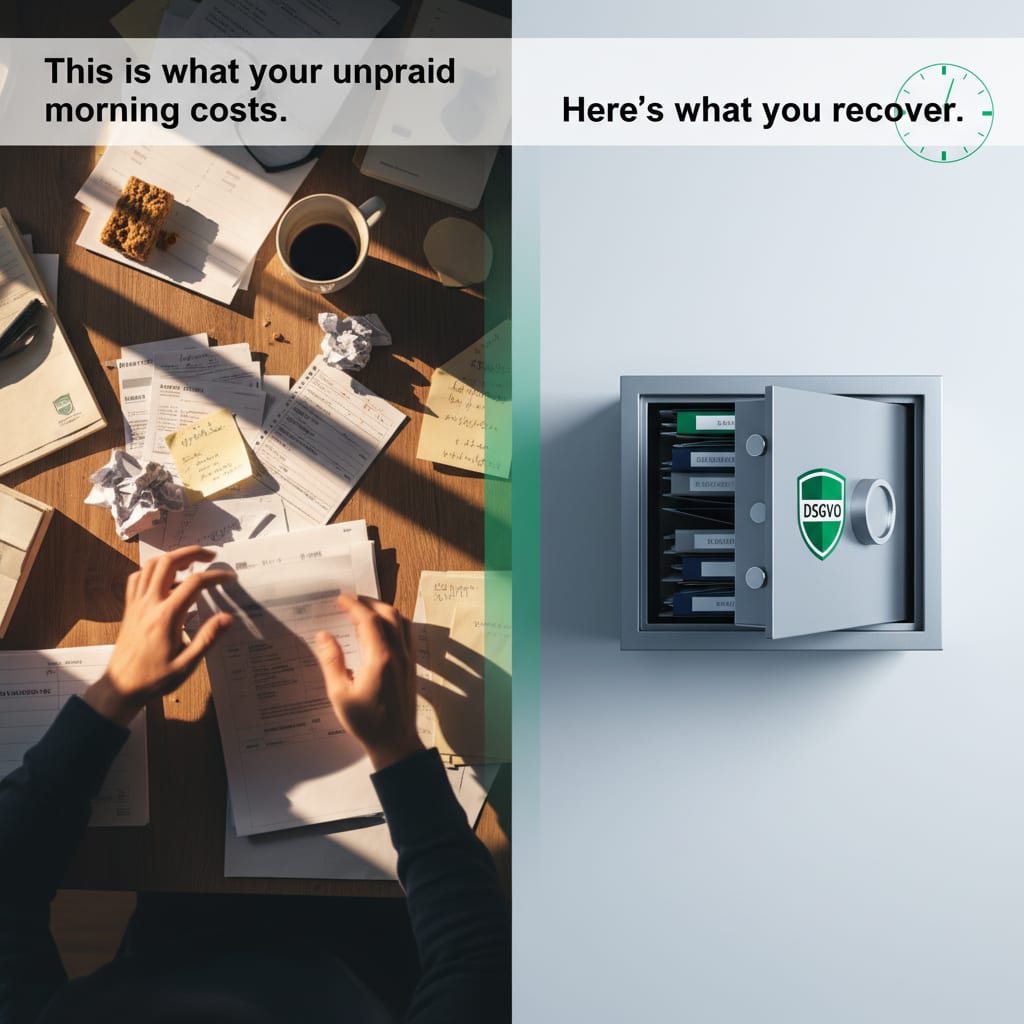
Self-Hosted AI for Sensitive Data: Why It Matters
Still pasting client data into ChatGPT as a consultant or accountant? Here"s why that"s more dangerous than you think–and how self-hosted AI protects you (without needing your own server).

AI Pipelines: Reclaim Consulting Hours and Win
Consultants lose €1,440/month to unbillable work–12% of your time, just gone. AI pipelines fix that: no coding, no devs, in under 60 minutes. Here"s how to reclaim your margin and scale your solo consulting business.

AI Automation Setup vs. Full-Time Hire: Agency Cost
A full-time employee costs €48,000–62,000 a year. An AI automation setup? Just €8,400–20,000 in year one. Get the numbers, break-even formula, three scenario comparison, and a fill-in ROI template to see what makes sense for your agency.

Automate Agency Reporting, Briefings, and SEO Without a Developer
63% of agency staff spend 14.5 hours a week on reporting. With three account managers, that's €87,000 wasted capacity per year. Here"s a step-by-step guide to automating reporting, content briefings, and SEO analysis–no developer required.

Agency AI Automation: Time Savings and Worthwhile Tasks
AI will save your agency hours–but only if you automate the right things. Most agencies waste 174 hours monthly on reporting. The five biggest myths about AI automation, what they really cost, and how to unlock real ROI.

How Agencies Can Scale Content with AI–Without Losing Quality
80% of agencies use AI, but 68% lack a repeatable process. Here"s why copy-paste workflows fail–and how a 3-step system can cut content production time by 80% while keeping every client"s unique voice intact.

AI Mistakes Digital Agencies Make and How to Dodge Them
80% of German agencies use AI, but 68% have no real strategy. The result? Expensive tools, same old headaches. Here are the seven mindset traps you need to avoid–and how to actually get more done with less stress.
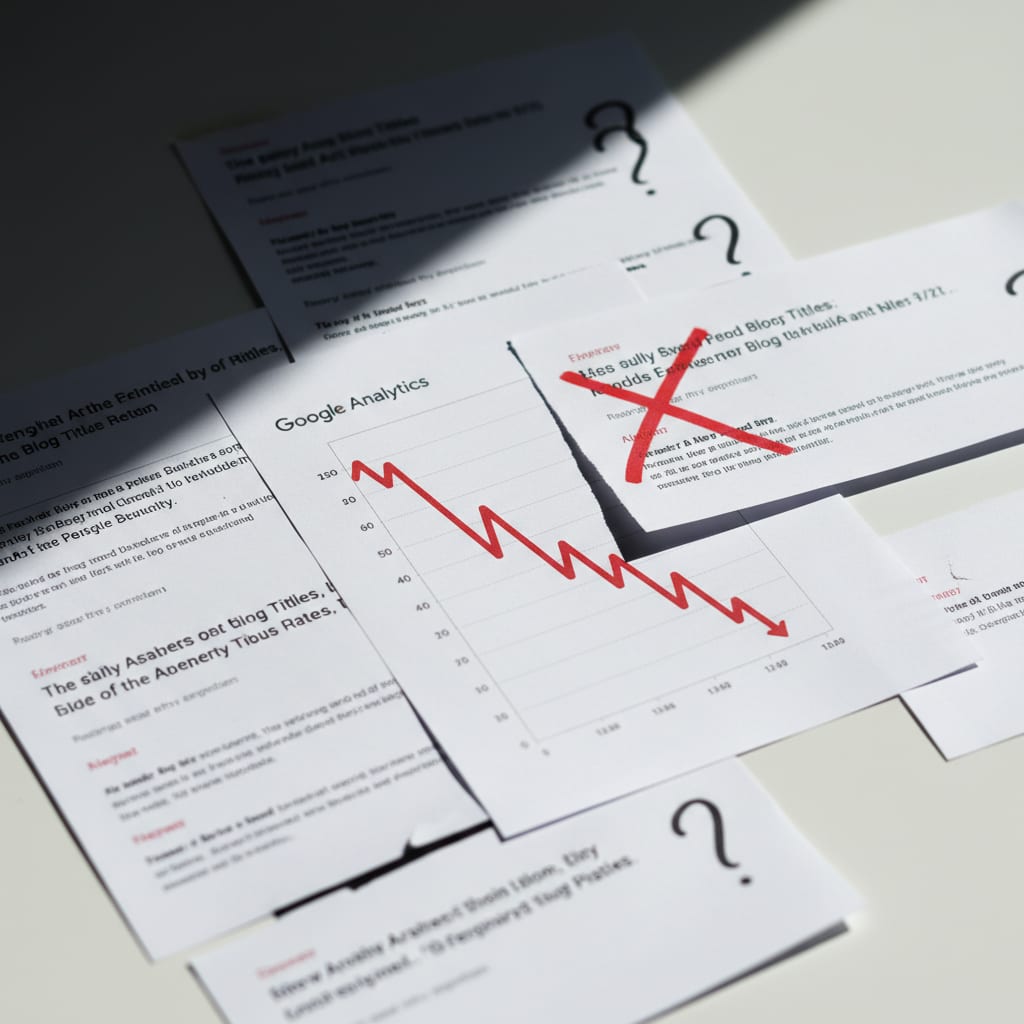
Google AI Penalty: What To Do
Organic traffic dropped overnight after using AI content? Wait before deleting everything. Most teams act too fast–and make it worse. Here"s how to diagnose, audit, and recover step by step.

AI Content Automation: Hidden Risks for Your Team
Full AI automation doesn't save you time – it just moves the risk. Busting five myths that could cost your content team dearly, plus what actually works if you want scalable, high-quality content.

How to Build a Truly AI-Competent Team in Your Agency
80% of German digital agencies use AI tools–but 68% lack a real roadmap. That"s not a tech issue, it"s a skills gap. Here"s a three-level framework, a 90-day plan, and how to actually see ROI.

AI Agents: Not Your Chatbot or Zapier Zap
Your agency automates–but still burns 56 hours a week on reporting alone. Why chatbots and Zapier Zaps don"t solve your real problems, and how AI agents go where no macro or bot can.

Agency AI Automation as a Service: Sell & Get Paid
Most agencies use AI but don't have an offer clients will pay for. Learn–step by step–how to design, pitch, price, and deliver your first paid AI retainer: package ideas, conversation scripts, pilot structure, and price models.

AI Integration for Agencies: Your Hands-On Guide
59% of agencies juggle 4–15 tools–none of which talk to each other. Here"s your no-BS, step-by-step guide to adding AI to your stack without needing a full-time workflow manager.
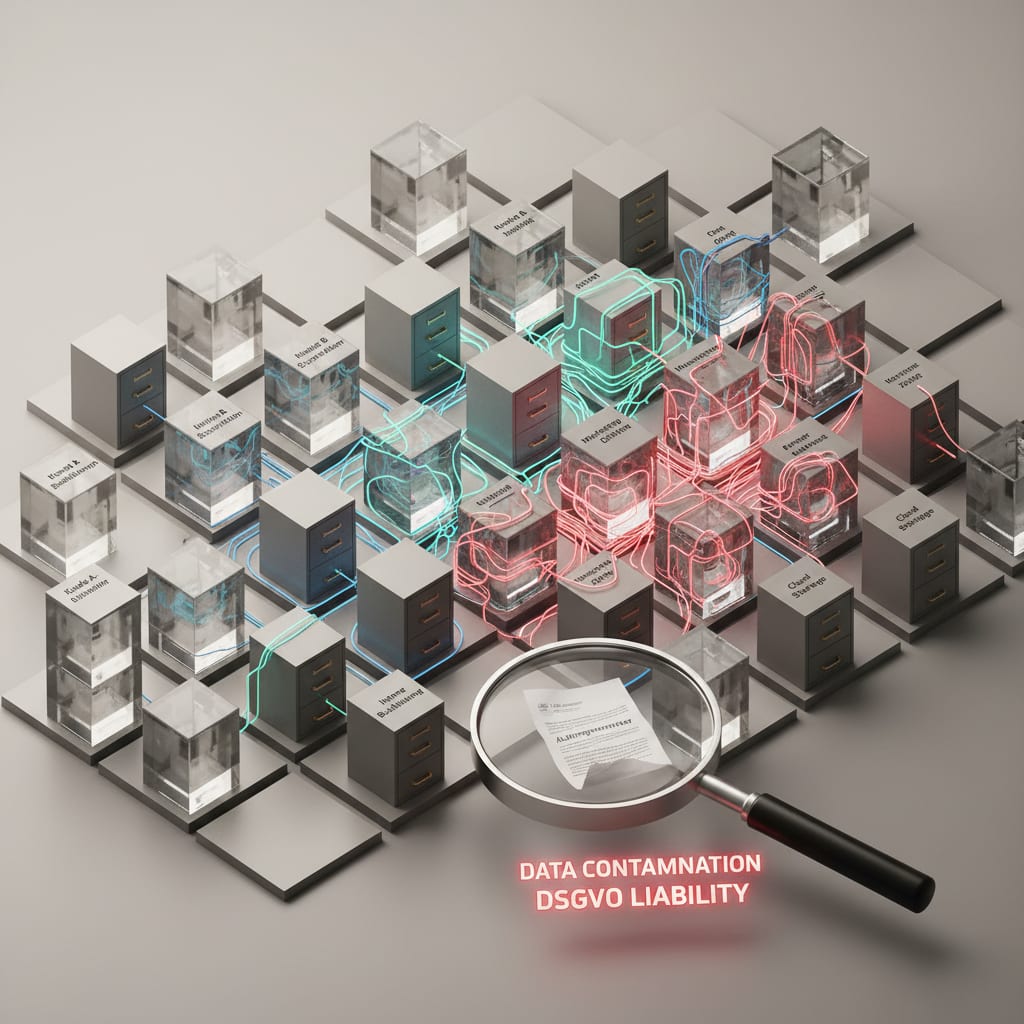
DSGVO & AI for Agencies: What You REALLY Need to Know Legally
80% of German digital agencies use AI–but almost none realize they're legally on the hook as data processors. Why a missing DPA could cost you, how tool chaos turns into GDPR roulette, and how to protect your agency (and your clients).

Self-Hosting AI for Agencies: Costs, Break-Even, Pitfalls
Should your agency build its own AI platform, or stick with cloud APIs? For 90% of agencies under 30 people, cloud is cheaper–until you start selling AI as a product. Get the real break-even math, hidden costs, and a decision matrix that actually helps.

Retrieval-Augmented Generation: Stopping AI Hallucinations?
RAG can cut AI hallucinations by up to 70%–but it won"t wipe them out. Here"s what every content team needs to know about RAG"s new error class before a made-up stat lands you on Google"s front page.
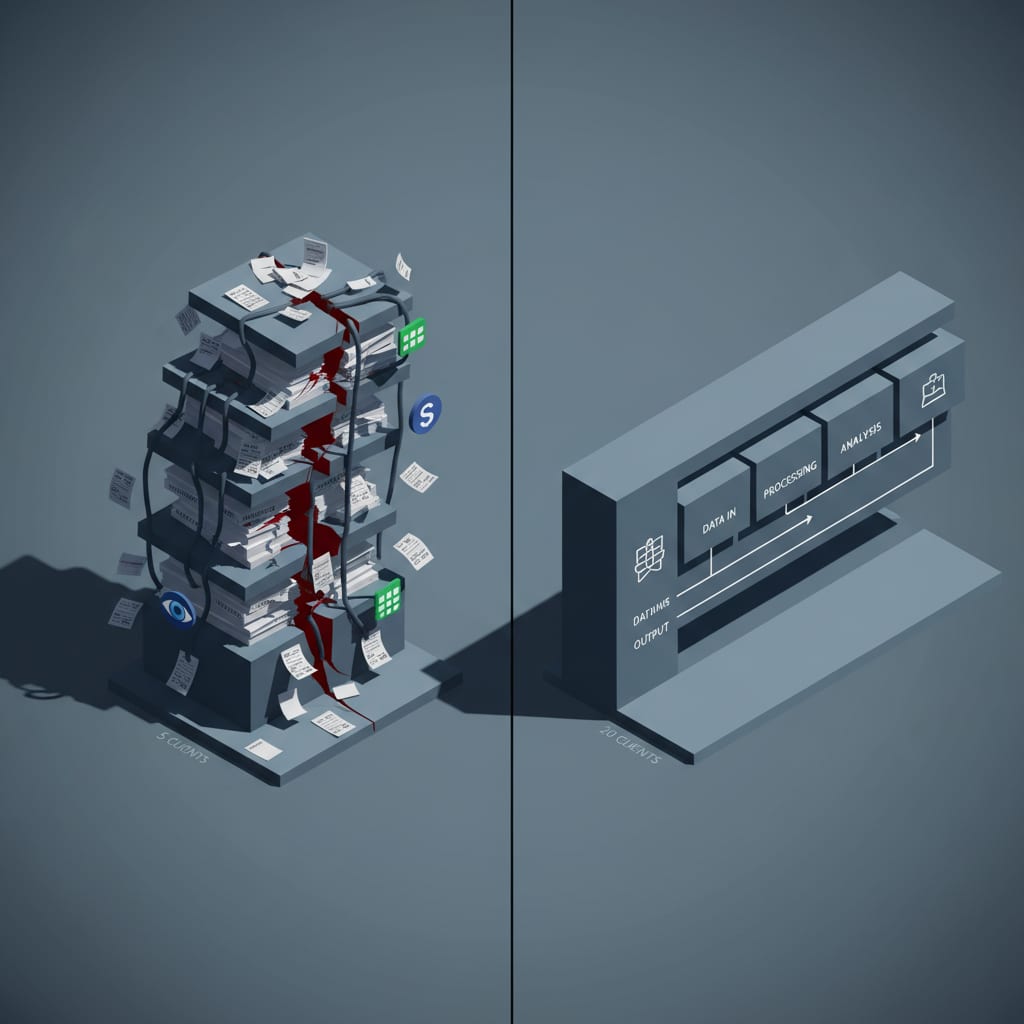
What Is an AI Agent–and When Does Your Agency Actually Need One?
80% of agencies use AI tools, but 68% have no AI roadmap. A Zapier automation isn't an agent. Neither is your chatbot. That distinction determines if your 25-person team can handle 18, or even 50, clients. Here"s what every digital agency needs to know.

Extract Structured Data (FAQs, Schema.org) from Articles
Stop wasting time on manual JSON-LD. Discover how AI agents extract FAQPage, HowTo, and ArticleSchema from your finished articles in under 10 seconds–and how to bake this into your content workflow, no coding required.
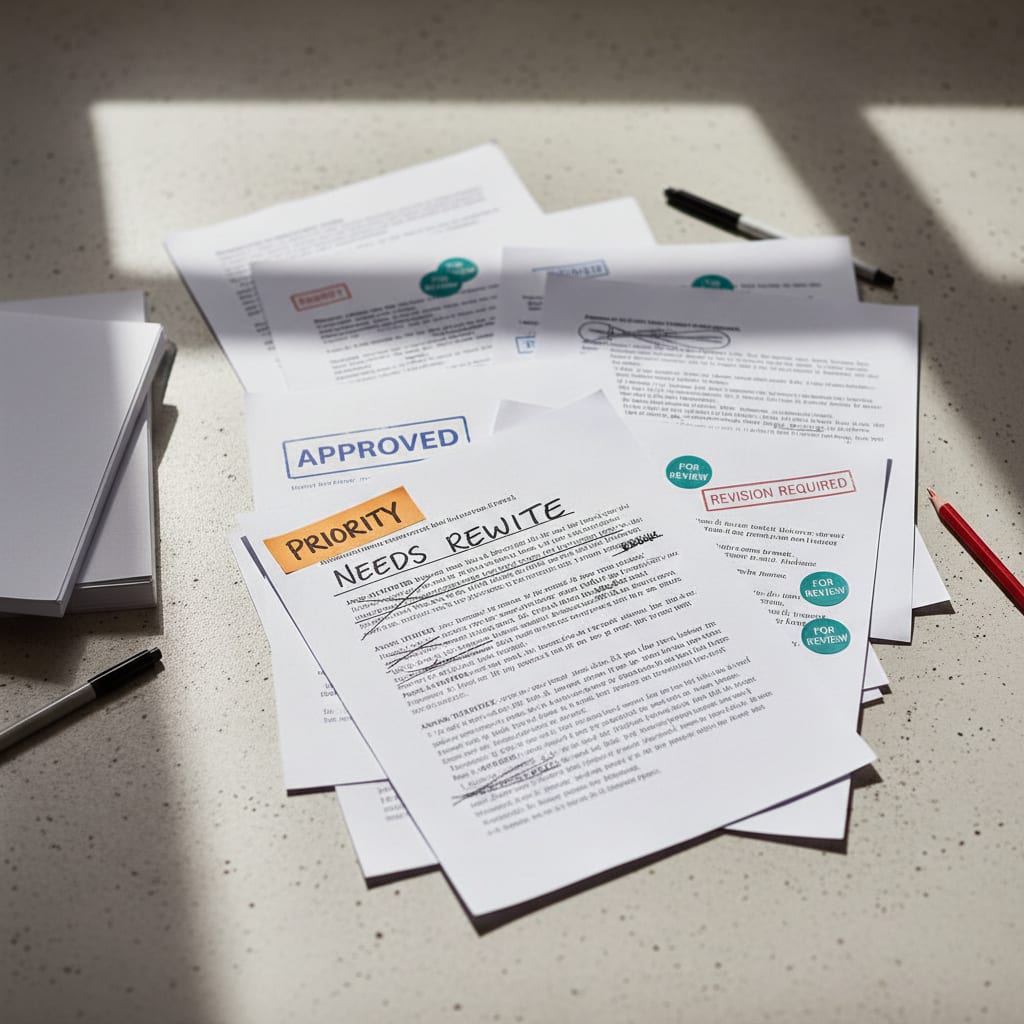
Human-in-Loop Content Approval: Match Review to Risk
If you review every piece of AI-generated content by hand, you're slower than before automation. A 3-level gate system fixes this: targeted human checks, not universal hold-ups.

Automate Content Translation and Localization, Sound Like Your Brand
DeepL nails accuracy, but misses your brand's voice and cultural nuance. This 4-step AI localization pipeline slashes manual effort by 80% and delivers content that clicks with every market – not just a word-for-word translation.

AI Writing: Build Your Brand Voice for AI
AI writes flawless sentences–but it never sounds like you. That"s not a prompt problem. That"s because you"ve never actually shown your AI what your real voice is. Here"s the method that fixes it.

AI Analyzes Content Performance and Recommends Actions
Tired of wasting 15 hours a week on data wrangling and only 5 on actual analysis? Here"s how to flip the script with an AI agent that connects your analytics, finds hidden opportunities, and delivers clear, prioritized content actions–no GA4 certification required.

Content KPIs: Automate 80%, What Matters Now?
Publishing 12 articles a week looks great–until you realize AI wrote 11 of them and your pipeline is silent. Here are the only KPIs that matter for content teams in 2026–plus a decision matrix by team size.

AI Time Savings for Content Marketing Teams Weekly
Three hours or 250? Both numbers are real when it comes to AI time savings for content teams. Which one applies to you depends on a single variable almost no one measures: your team's AI maturity.

AI Content Pipeline vs. Manual: Proving Your Advantage
No baseline, no proof: Here's how to measure your AI content pipeline's ROI in 5 steps–complete with real numbers, A/B test methods, and a 4-stage timeline for results you can actually defend.

GTM Misalignment: How to Spot Early Warning Signs in SaaS
GTM misalignment is the #1 reason B2B SaaS companies miss revenue targets, according to Forrester (2025). But Ops PMs see the signals first. Here"s how to recognize, diagnose, and act before the problem hits your bottom line.

How Do You Stop Your AI Agent From Making Up Facts in Content?
AI hallucinations aren't random–they're a pipeline design problem. Here's the four-layer fact-checking architecture that keeps your content agent from lying, and stops bad data before it torpedoes your trust (and leads).

WIP Limits: Why Ops Teams Ignore Them at Their Peril
23 tasks 'In Progress', only one finished. That"s not bad luck–it"s Little"s Law in action. Here"s why WIP limits are the most important (and ignored) concept for Ops teams drowning in SaaS tools.

Boss: Invest in AI for Content Marketing
Most marketers lose budget battles–not because their AI pitch is bad, but because their arguments miss the mark. Here"s the political playbook for winning the AI automation budget conversation, complete with ROI math and objection busters.