What Is LangChain–and Do You Actually Need It to Build AI Agents?
LangChain boasts 95,000 GitHub stars, but for most agencies, it's the wrong starting point. Discover why this hyped AI framework can drain weeks from your team–while ready-made platforms solve your problems in days, and 55% of your clients consider switching agencies.
Georg Singer··13 min read
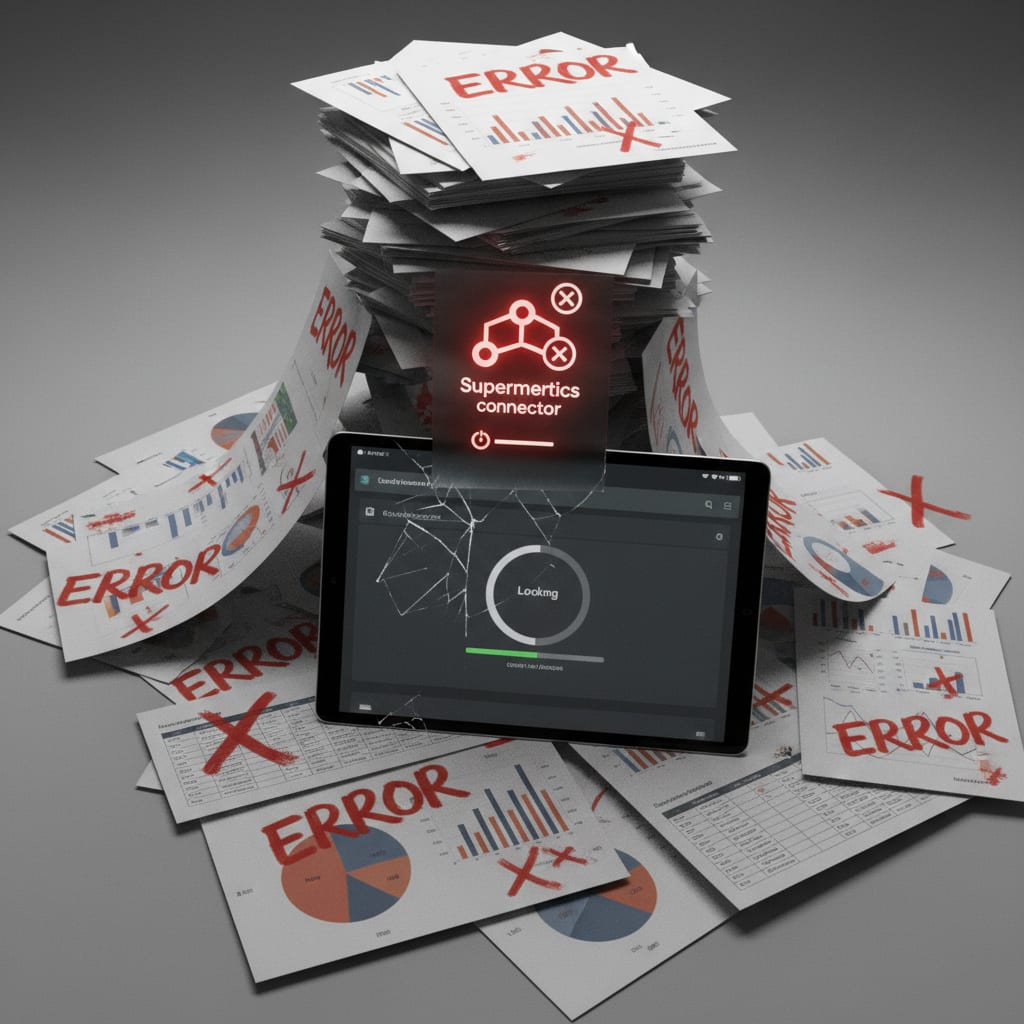
Imagine this: You're a developer at a digital agency, deep-diving into the world of AI agents after reading a heated Hacker News thread. Every other comment shouts "LangChain!"–so you roll up your sleeves, spend three weeks untangling its layers, building abstraction over abstraction. But by the end of your sprint? Not a single client report is automated.
Those 56 hours a week your team wastes on manual reporting–the equivalent of an entire full-time role, according to Wayfront–remain untouched.
**LangChain might be the best thing that can happen to an agency owner–**as long as you don"t try to use it yourself on day one. Let"s bust four common myths that keep cropping up in dev circles and agency boardrooms alike. Because the tools you choose don"t just shape your tech stack–they shape your margins, your client churn, and your team"s sanity.
Myth #1: "LangChain Is the Gold Standard for AI Agents–So I Need It"
Ever scrolled through a Reddit or Hacker News thread on AI automation? You"d think LangChain is the only way to build an agency with AI chops. It"s everywhere, cited as the holy grail.
But here"s the reality check. LangChain has 95,000+ GitHub stars for a reason: it"s built for developers who want to code custom LLM (Large Language Model) applications from scratch. Not for agencies desperate to automate client reporting without writing a line of code.
The developer echo chamber is real. On forums like Reddit and Hacker News, about 90% of those debating AI agents are software engineers. They rave about LangChain because it solves their problem: building complex, tailored AI apps. But that"s not what most agencies need–especially if you"re running a 25-person performance marketing shop.
According to the DIHK Digitalization Report 2026, 80% of German digital agencies already use AI tools, but a whopping 68% still don"t have a concrete AI roadmap. Translation? Most are experimenting. You don"t need a commercial driver"s license just to drive to the supermarket for the first time.
Let"s get practical. On Reddit (r/localseo, a frustrated SEO agency owner asks: "How much time do you spend creating client reports every month? And do clients even understand them?" The discussion? It"s all about hours and client confusion–not framework choices.
Another agency leader on Reddit (r/SaaS wonders: "What are agencies using to manage clients without forcing 5 tools together?" LangChain rarely even gets a mention.
Even Anthropic"s own documentation for "Building Effective Agents" gives this blunt advice:
"Start with the simplest solution possible." LangChain, ironically, is the opposite of simple.
So if you"re feeling the pressure to "keep up" with developer trends, remember: Your first successful AI step doesn"t need to be the most complicated one.
Let"s dig deeper into why the technical allure of LangChain can be a trap–and what really matters for your agency"s bottom line.
Myth #2: "Without LangChain, I Can"t Build a Real AI Pipeline"
This myth is sneakier. It sounds technical, so it rarely gets challenged–especially in meetings where no one wants to admit they"re lost.
Let"s clarify: LangChain is an open-source framework (Python and JavaScript) that lets developers stitch together complex AI workflows–chains of LLM calls, memory systems, tool integrations, and fully autonomous agents. It"s powerful and flexible, but it demands serious coding skills and a steep learning curve.
If you love writing code and building everything bespoke, LangChain is a dream. But most agencies? They just want the pain to stop.
According to the AgencyAnalytics Benchmarks Report 2024, 63% of agency staff spend more than 10 hours a week on reporting–averaging 14.5 hours. That"s not just a few wasted afternoons; it"s a budget black hole.
BestClick Studio runs the numbers: A single Google Ads report takes 125–165 minutes by hand. For 8 clients, that"s 240 hours a year–roughly €17,000 (~$19,200) in lost capacity that retainers don"t cover.
This isn"t a LangChain problem. It"s a process problem–one that off-the-shelf platforms can fix in days, not weeks.
Reddit agrees. In r/agency, a simple question–"Client Reporting Tool?"–sparks answers like AgencyAnalytics, DashThis, Looker Studio. LangChain doesn"t even show up.
Let"s get brutally specific. Here"s what agencies actually need–and what it takes to get there:
| Task | Need LangChain? | Is a Platform Enough? | LangChain Setup Time | Platform Setup Time |
|---|---|---|---|---|
| Monthly client reporting | No | Yes | 8–12 weeks | 2–5 days |
| Generating content briefs | No | Yes | 4–6 weeks | 1–2 days |
| Automating first-contact replies | No | Yes | 3–5 weeks | 1–3 days |
| Competitive analysis | No | Yes | 4–8 weeks | 2–4 days |
| Building a custom AI product | Yes | Rarely | Custom | Not applicable |
For most agency workflows, framework choice is irrelevant. The real question is: does the process actually work–consistently, reliably, and without eating your team"s life?
Speaking of team life, let"s talk about skills. Because the next myth is costing you more than you think.
Myth #3: "LangChain Skills Are What My Team Needs Now"
This myth pops up everywhere–sprint retros, annual CTO check-ins, LinkedIn posts about "future readiness." It sounds strategic. But for most agencies, it"s dead wrong.
Here"s the real story: LangChain expertise only makes sense if your team is building unique AI products–not just automating client work.
Let"s put this in perspective. According to AgencyAnalytics 2025, 55% of clients are considering switching agencies in the next six months. The main reason isn"t poor results–it"s bad communication. That"s right: not enough LangChain, but not enough transparency.
All the while, your team is drowning in framework documentation, and your churn risk climbs with every missed deliverable.
Anthropic"s research blog makes a key distinction:
An "AI pipeline" is a fixed, deterministic sequence of steps–predictable, cheap to run, and low-maintenance. An "AI agent" makes its own next-step decisions–flexible, but more error-prone and expensive.
For 90% of agency automation, simple pipelines are more than enough. LangChain is built for the edge case–for when you need true agent-level autonomy.
What does your agency actually need?
- Prompt engineering: crafting AI prompts that get the right results
- Workflow design: mapping out repeatable, error-proof processes
- Output quality control: ensuring client deliverables are accurate
None of these require months of framework study. They pay off immediately–in billable hours.
But here"s the catch: 48% of agencies say tracking billable hours is their biggest operational pain point, because non-billable hours spent learning frameworks quietly erode your margins.
It gets worse. The Drum (May 2025) reports 57% of agencies lose €900–4,600 ($1,000–5,000) per month to unbilled scope creep–and only 1% consistently bill for out-of-scope work. If your account manager spends 20% of their time reading framework docs instead of serving clients, the problem just gets bigger.
Here"s the core difference:
- "Using AI" means quick setup, fast results, and happy clients.
- "Building AI" is a six-month project that may never pay off.
And when it comes to which skills your team actually needs to build AI agents, framework expertise is dead last.
Let"s see how the real world talks about this. A Reddit agency owner (r/DigitalMarketing asks: "How much time does your team spend on client reporting monthly? Is it still a painful process?" Nobody mentions LangChain. They talk hours. They talk margins.
Bonus pain: trusted.de finds 95% of agency employees regularly work overtime–burnout isn"t rare, it"s the norm for 10–50 person shops. Starting a framework project with no clear end? That"s how you guarantee another wave of burnout.
So, if you"re debating whether LangChain skills are your bottleneck–they"re not. Your real bottleneck is keeping the lights on, the clients happy, and your team sane.
But what if you"re convinced you can build your own tools, and platforms are just "overpriced shortcuts"? Let"s break down why that thinking can cost you more than you expect.
SwiftRun automates repetitive workflows with AI agents – so your team can focus on what matters.
Myth #4: "LangChain and a Simple Platform Do the Same Job"
Budget meetings love this myth. "Why pay for a platform when we can just build it ourselves?" Sounds entrepreneurial. Most of the time, it"s a trap.
Let"s get real: The difference isn"t about features–it"s about time, people, and money.
Here"s what it actually looks like:
The LangChain route for automating monthly reporting across 20 clients:
- Setup: 8–12 weeks of senior developer time (€80/hr)
- Minimum dev cost: ~€25,600 (8 weeks × 40h × €80)
- Ongoing maintenance: 4–8 hours/month; every API change = a code update
- Required skills: Python, LangChain API, prompt engineering, deployment
- Multi-client setup: Needs custom implementation–nothing out-of-the-box
- Failure risk: High; framework updates often break existing chains
The platform route for the exact same use case:
- Setup: 2–5 days of internal work (no code required)
- Cost: €200–500/month SaaS + 1–2 days onboarding
- Ongoing maintenance: The platform vendor handles API updates and connectors
- Required skills: Workflow thinking, prompt engineering
- Multi-client setup: Standard feature; client data isolated, workflows scale instantly
- Failure risk: Low; platform includes monitoring
Let"s do the math: At €80/hour for a senior developer, building with LangChain quickly burns through €25,000–40,000 in pure dev time–before your client even sees a white-label report. That"s a business decision, not a technical one.
Meanwhile, on Reddit (r/PPC, a heated thread about tool cost outpaces framework debates: "Supermetrics forcing legacy customers onto new pricing models–anyone else affected?" Connector failures are the second most common complaint on G2, and after April 2024, prices jumped 40–60% with no new features. If your custom build depends on these connectors, you inherit all that risk.
Another Redditor (r/GoHighLevelForum nails the scaling problem: "My systems worked at 5 clients… now at 18 they're completely broken." This isn"t a framework issue–it"s a multi-client infrastructure issue. And self-built solutions fail here most often.
On r/content_marketing, a "Scaling question for agency operators" triggers the same core anxiety: At what point does the system break? With LangChain-powered custom builds, the honest answer is: sooner than you"d think.
According to the Gartner Martech Survey 2025, 59% of agencies juggle 4–15 tools at once–and a third want to shrink their stack, not add to it. Framework-based solutions increase complexity, not reduce it.
And here"s the market context: Agency consolidation in 2025/26 is accelerating. Mid-sized agencies (rank 11–50) saw their revenue share drop from 42.2% (2023) to 34.7%. Betting on an 8–12 week custom dev sprint is risky–especially when margins are already under pressure.
So, is there ever a case for LangChain in an agency? Let"s talk about the exceptions–because there are a few.
When LangChain Actually Makes Sense for Agencies
Here"s the nuance most anti-LangChain articles skip. Yes, the criticism is real: on GitHub Issues and Hacker News, LangChain is often slammed as "over-engineered" and "too many abstractions." But that"s not a judgment on the framework itself–it"s about using the wrong tool for the wrong job.
There are three scenarios where LangChain is genuinely the right call:
- You"re building a proprietary AI product to sell to clients–not just automating internal workflows, but creating a marketable tool. Here, framework-level flexibility is worth it.
- You have a seasoned Python developer with actual, dedicated capacity–not someone pulled off client projects, but a dev who owns and maintains the framework.
- Your requirements are so specialized–custom memory systems, unique data structures, multi-agent orchestration–that no existing platform can do the job.
For the record, the choice of framework doesn"t affect which AI model you use–both approaches tap into the same underlying models.
Here"s your honest decision matrix:
| Criterion | Your Answer |
|---|---|
| Planning to build and sell a unique AI product? | Yes / No |
| Have a senior Python dev with dedicated bandwidth? | Yes / No |
| Needs can"t be met by any existing platform? | Yes / No |
| Budget for 2+ months" development with no client output? | Yes / No |
Scoring:
- 3–4 Yes: Seriously consider LangChain
- 0–2 Yes: Go with a platform
If you"re like most 15–50 person agencies, you"ll land at 0 or 1 Yes. That"s not a weakness–it"s smart prioritization.
Now, if you"re ready to get unstuck and make progress this month, here"s how.
The Pragmatic Path: What Your Agency Should Do Instead
According to AgencyAnalytics, after automating reporting with AI, agencies cut monthly reporting time from 15–20 hours to just 2–3 hours. That"s 137 hours saved per month–not because of a framework, but because of a steady, automated process.
[Wayfront] estimates 70% of all reporting time is automatable–the part spent on analysis, explanations, and recommendations. The creative, client-facing work? That still belongs to your account manager. It"s the bureaucratic grind that"s ripe for automation.
So, what should you actually do–without getting lost in framework hype?
Your Three-Step Checklist for Results (No Coding Required)
- Step 1: Pinpoint a single, recurring process that"s eating real hours. Candidates: monthly reporting, briefing creation, first-contact responses. Don"t pick what"s most exciting–pick what"s most annoying.
- Step 2: Test-drive an off-the-shelf platform before writing a single line of code. We"re talking days, not weeks.
- Step 3: Only consider custom development if–and only if–the platform truly hits its limits in real-world use, not just on paper.
⚠️ Heads up: The #1 mistake for mid-sized agencies isn"t picking the "wrong" framework. It"s starting with the coolest tool instead of the most urgent problem. LangChain is cool. Your monthly reporting backlog is urgent.
The community knows this. On Reddit (r/agency, a thread on reporting tools is split: "Which tools are you using for client reporting and why?" Most answers? Ready-made dashboards. Framework talk? Nowhere.
Another Reddit user (r/AgencyGrowthHacks asks the million-dollar question: "Is automated reporting improving client relationships or reducing transparency?" The upshot: The lever isn"t the framework. It"s whether your report arrives on time, every month, clear and consistent.
And that 56 hours of weekly reporting loss? It won"t vanish with a new framework. It disappears when you have a running, automated process–no matter which stack powers it.
One more Reddit gem (r/agencynewbies: "What"s the most time-consuming task that clients don"t realize takes so long?" The answers: reporting, briefings, coordination. Not a single person mentions framework decisions.
From my experience: The agencies that made AI work fastest in 2025? They didn"t start with the "best" framework. They automated their most hated Monday task first. LangChain was rarely tool #1–usually #3 or #4, once they truly understood where bespoke solutions were needed.
If you want to go down this path without developer overhead: For agencies with 15–50 staff, dealing with multi-client setups and isolated client data at the pipeline level, SwiftRun.ai offers a solution that can be set up in days, not weeks, with no dev bottleneck and no late-night connector outages.
The Bottom Line–Forget the Myths, Here"s What"s True
LangChain is an excellent framework–for the right use case. That means: a team with developer bandwidth, building a unique AI product, or facing requirements that no platform can handle.
But if your goals are to automate reporting, generate briefs, or speed up client responses, LangChain is the most expensive tool in your toolbox–measured in weeks of ramp-up no client will pay for, and non-billable hours that quietly kill your margins.
The question was never, "Is LangChain good?" It"s: "Am I the right user?"
Ready to escape the framework rabbit hole and boost your agency's efficiency? SwiftRun.ai helps you automate critical processes in days, not weeks. Start free – no credit card required.
Related Articles:
LangChain AI framework agenciesLangChain alternativesbuilding AI agents for agenciesno-code AI automationLangChain vs n8n
Related Articles

Digital Agencies
AI Pipelines vs. Agents: The Choice That Eats Your Margin
Running AI agents where a pipeline would do? You"re burning 90% more per task–often for no benefit. Let"s break down real agency costs, see side-by-side numbers, and give you a decision matrix that could save your profit margin.
Jul 17, 2026·13 min read·Georg Singer

Digital Agencies
AI Assistants versus Autonomous Agents: Hidden Cost
63% of agency staff spend over 10 hours weekly on reporting–because chatbots and macros aren"t true AI agents. Here"s what sets real agents apart, how much time you"re losing, and why it matters for your agency"s margin.
Jul 16, 2026·15 min read·Georg Singer
Digital Agencies
Self-Hosting AI: Worth It for 20-50 Employee Agencies?
Cloud AI can cost your 30-person agency up to €900/month. Self-hosting claims €80. Both are true–and both leave out half the story. Here"s the real math, plus when self-hosting actually pays off.
Jul 15, 2026·19 min read·Georg Singer