AI Automations for SaaS: High ROI for Small Teams
Most SaaS teams see zero ROI from GenAI–not because AI itself fails, but because they automate the wrong processes. Only four automation types have proven financial impact. Everything else is just burning budget.
Georg Singer··21 min read
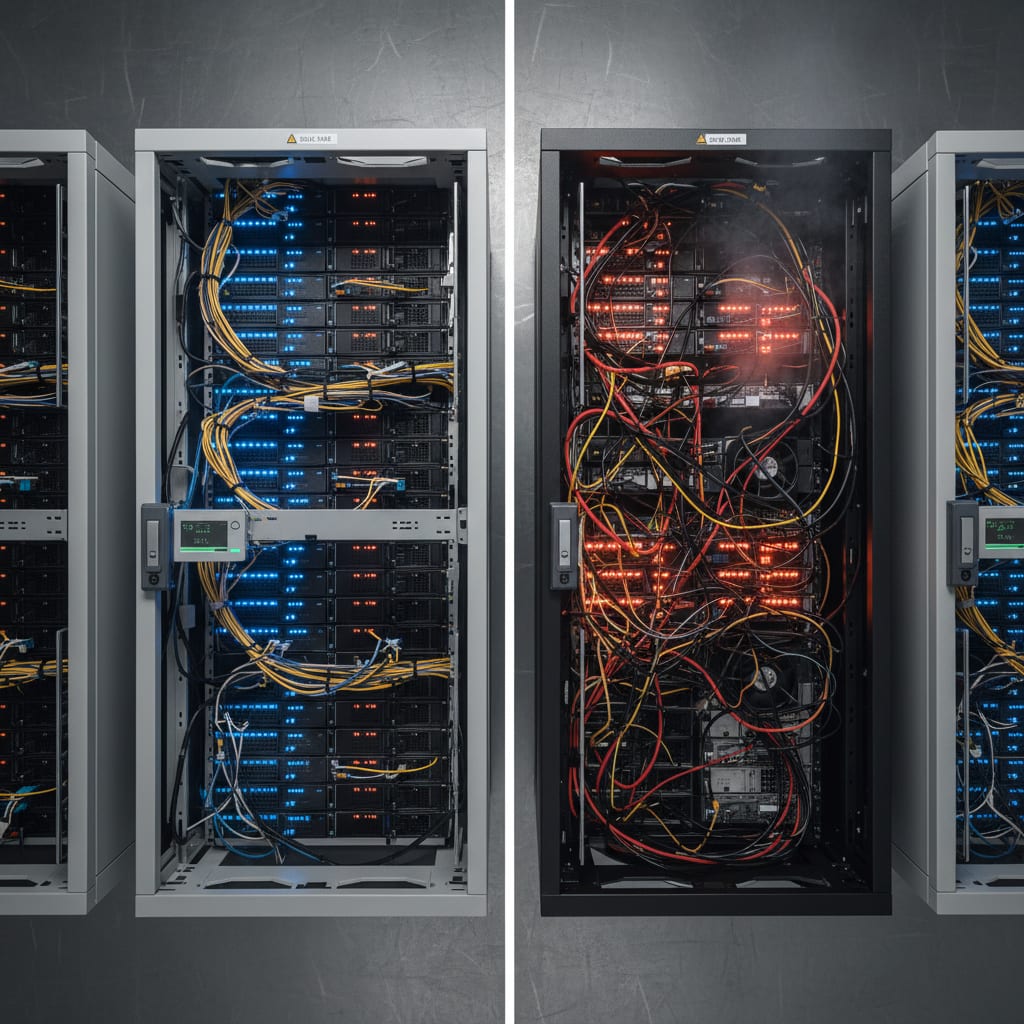
Jason Calacanis highlighted the significant cost of AI agents, estimating it at $300 per day, per agent, even at a low utilization rate of 10–20%. This translates to approximately $100,000 annually for an automation that spends much of its time idle.
The situation is often worse, as AICosts.ai reports that a substantial 73% of teams do not track their AI agent spending in real time. Consequently, when they finally do review their expenditures, the average overrun is a staggering 340% higher than initially planned.
Before initiating another AI automation project, it's crucial to ask: How many of your current AI projects have a clearly defined ROI target? If this question is difficult to answer, it's highly probable that the organization is currently incurring unnecessary expenses.
Key Takeaways
According to the data:
- AI agents can cost as much as $300 per day, even with low utilization.
- A significant 73% of teams fail to track AI agent costs in real-time, leading to average overruns of 340%.
- A mere 5% of enterprise GenAI pilots reach production.
- The four highest-ROI automations for small to medium SaaS teams are Support Triage, Onboarding Automation, Internal Knowledge Retrieval, and Sales Support.
- Total Cost of Automation (TCA) is often 3–5 times higher than initial token cost estimates.
The 95% Trap: Why Most AI Projects Never Pay Off
It's a common observation that most Generative AI pilot projects within SaaS companies never advance beyond the initial demonstration phase. This isn't a coincidence; it reflects a systemic issue.
As noted by @rohit4verse on X, a recurring problem is the failure to move beyond demonstrations: "I saw another agentic AI project fail last week. Same mistake as always. Over 40% of these projects don"t fail because of the model–they fail because of bad architecture. Everyone"s building demos." This candid assessment points to a fundamental flaw in project execution.
Recent data underscores this challenge, indicating that 95% of enterprise GenAI pilots never reach the production stage (Composio AI Agent Report (2025)). Gartner further predicts that by 2027, 40% of all agentic AI projects will be discontinued due to reliability concerns. These figures are not pessimistic forecasts but reflect the current realities in the field.
The question then becomes: why do so many AI projects falter before delivering tangible value?
What"s Behind the 95% Failure Rate? The Demo-to-Production Gap
The primary obstacle is the Demo-to-Production Gap. This issue is less about the capabilities of AI models themselves and more about the challenges encountered when a smooth demonstration transitions into the complexities of a live, real-world environment.
This pattern is frequently observed:
- The automation functions flawlessly in a controlled staging environment.
- It performs as expected for test users.
- However, the moment a real customer interacts with it, the system crashes or fails.
This is the AI equivalent of the classic "it works on my laptop" problem, but with far more significant consequences. The underlying reasons for this failure often include a lack of hard limits, inadequate state management, and insufficient cost monitoring. Without these critical components, projects are unable to cope with the demands of production scale. The fundamental issue is not the AI technology but the absence of robust infrastructure to support it.
Why Is AI Automation So Rarely Profitable for SaaS?
The harsh reality is that most teams embark on AI initiatives without a quantifiable ROI hypothesis. They tend to tackle overly complex problems too early, neglecting the essential, albeit less glamorous, architectural groundwork.
The statistics are stark. The Composio AI Agent Report (2025) reveals that 95% of GenAI pilots never reach production. This failure isn't due to flawed AI models but stems from teams not defining success metrics, failing to track the right data, and addressing the wrong problems initially.
An even more unsettling finding comes from the METR study (July 2025). This research found that experienced developers using AI tools actually took 19% longer to complete tasks compared to not using AI, all while believing they were 20% faster. This significant discrepancy highlights not just a perception gap but a systematic measurement error that directly impacts budget decisions and tool procurement. Consequently, CTOs often invest in solutions that yield no ROI because teams overestimate the actual performance of these tools.
The true impediment to AI ROI is not inadequate AI technology but the absence of a concrete ROI hypothesis before development even begins. A vague goal like "We"ll automate this with AI" is insufficient. A well-defined hypothesis, such as "We"ll reduce support time-to-first-response from 4 hours to 30 minutes, maintaining customer satisfaction, with a total cost of automation (TCA) capped at €5,000 in the first year," is what truly sets a project up for success.
Having identified the core reasons for AI ROI failures, let's shift focus to the strategies and elements that truly contribute to making automation profitable.
Calculating ROI for AI Automation: What Really Moves the Needle
It's a common oversight: most teams only consider API costs and overlook the truly significant expenses. This narrow focus is precisely why AI projects so frequently exceed their allocated budgets.
Total Cost of Automation: The Hidden Expense That Kills ROI
The Total Cost of Automation (TCA) extends far beyond your API bill. It encompasses a comprehensive range of expenditures, including:
- Development time: This covers setup, debugging, handling edge cases, and fine-tuning prompts.
- Ongoing operations: This includes costs for monitoring, setting up alerts, and performing regular model updates.
- Error costs: These are the expenses incurred due to incorrect outputs, increased support tickets, and potential customer loss.
- Non-determinism overhead: This accounts for the time spent on regression testing, a necessity because the same input does not always yield the same output from AI models.
The reality is that TCA is consistently 3–5 times higher than initial token cost estimates. While the API and token prices are visible, they represent only a fraction of the total investment. The remainder of the costs often remains hidden, emerging unexpectedly later in the project lifecycle.
To illustrate with concrete examples:
- A comparison by markaicode.com revealed that CrewAI generates 56% more tokens per request than LangGraph.
- LangChain"s memory wrapper introduces over one second of latency for each API call, as noted by codetodeploy.
These factors are often absent from initial token projections but significantly impact the final expenditure. Consider a striking real-world scenario: one user processed 140.4 million tokens in just 48 hours. The raw API cost for this would have been approximately $1,677. However, by implementing prompt caching, this cost was reduced to a mere $50 (source). This isn't just optimization; it represents the difference between achieving positive ROI and incurring substantial losses.
How Do You Actually Calculate ROI for AI Automation?
The fundamental formula for calculating ROI is:
ROI = (hours saved × hourly rate) + (measurable quality gain in €) – TCA
However, for effective prioritization, a more nuanced score is beneficial, one that considers both frequency and risk:
ROI Score = (frequency × time saved per task) / (implementation effort × risk)
A high score indicates a frequent task with low implementation effort and minimal risk, making it an ideal candidate for your first automation initiative.
Let's examine this with real-world data:
ROI Calculation Examples
| Scenario | Frequency | Time Saved | Impl. Effort | TCA/Year | ROI/Year |
|---|---|---|---|---|---|
| Support triage, 30 staff | 200 tickets/day | 3 min/ticket | 3 weeks | €4,000 | ~€18,000 |
| Knowledge retrieval, 20 staff | 15 queries/employee/day | 20 min/query | 4 weeks | €6,000 | ~€25,000 |
| Proposal drafting, 5 sales staff | 8 proposals/week | 90 min/proposal | 2 weeks | €3,000 | ~€12,000 |
Assumptions: €60/hr, 220 workdays/year, TCA includes dev, API, monitoring
Now, let's look at how costs can change with scale:
Cost Scenarios: What You Really Pay
| Tasks/Day | No Optimization | With Prompt Caching | + Batch API | Total Savings |
|---|---|---|---|---|
| 1,000 | ~€580/mo | ~€230/mo | ~€120/mo | ~79% |
| 10,000 | ~€5,800/mo | ~€2,300/mo | ~€1,200/mo | ~79% |
| 100,000 | ~€58,000/mo | ~€23,000/mo | ~€12,000/mo | ~79% |
Assumptions: Claude 3.5 Sonnet, 1,000 token input + 500 token output per task, 85% cache hit rate (Anthropic prompt caching, 90% discount for cached tokens), 50% batch API discount (OpenAI), EUR/USD 1.08 conversion. Actual results may vary by model, context, and caching.
Implementing prompt caching (which can offer up to 90% savings for repeated contexts with Anthropic) and batch API usage (providing a 50% discount for non-time-critical tasks with OpenAI) are not merely optional enhancements. They are fundamental architectural decisions that must be made upfront, before deployment, not as an afterthought.
⚠️ Warning: As reported by AICosts.ai, a significant 87% of AI agent cost overruns are attributed to "excessive autonomy", meaning the absence of hard limits. Never deploy an AI agent into a production environment without establishing strict budget caps, maximum token limits, and iteration ceilings.
Now that you understand how to identify valuable automation opportunities, let's delve into the specific types of automation that consistently deliver the best returns for SaaS teams.
The 4 Highest-ROI AI Automations for 10–50 Person SaaS Teams
Imagine your SaaS company is growing, perhaps to 20, 30, or even 50 employees, and you're looking to leverage AI to accelerate your progress. The key question is: where can you expect to see the most significant financial impact from AI?
The crucial insight is to prioritize deterministic pipelines over agentic loops. A deterministic pipeline is predictable–the same input will always yield the same output, making it verifiable through testing. In contrast, an "AI agent" makes independent decisions in a step-by-step manner. For automations where ROI is critical, predictability must come first. Resort to agents only when the business problem genuinely necessitates their dynamic decision-making capabilities.
The reason for this prioritization is rooted in reliability. Even with a high accuracy rate of 95% per step, a multi-agent system involving four stages can only achieve an 81% end-to-end reliability (Galileo). This is a mathematical certainty, not a subjective opinion. For SaaS businesses operating under service level agreements (SLAs), such a reliability rate is often unacceptable.
Let's examine the four types of automation that consistently demonstrate significant financial returns.
1. Support Triage & First Response: ROI You Can Measure on Day One
Consider a system where incoming support tickets are automatically sorted, prioritized, and met with an immediate first response. This is achieved through deterministic classification using predefined categories, rather than relying on the autonomous decisions of a "free agent."
Why is this a strong starting point?
- All critical variables are measurable: time-to-first-response, accuracy of ticket categorization, and the rate of escalation.
- You can establish a baseline performance within a week and observe measurable improvements within a month.
ROI Example (30-person SaaS, €500k ARR):
- Assuming 3 support agents at €45,000 per year each.
- An AI pipeline handles 40% of Tier 1 tickets, such as status checks and common FAQ responses.
- This results in annual savings of €18,000.
- With a Total Cost of Automation (TCA) of €3,000–€5,000 per year, the ROI exceeds 300% in the first year.
However, a crucial point often overlooked is the customer experience. While AI may expedite ticket resolution, a decline in customer satisfaction due to impersonal or ineffective automated responses can lead to increased churn. An AI automation that enhances speed but diminishes customer satisfaction effectively yields negative ROI, with the cost hidden within churn metrics.
2. Onboarding Automation: ROI by Reducing Churn
Imagine onboarding sequences that dynamically trigger personalized actions based on user behavior–such as feature adoption, login frequency, or points of user drop-off.
SaaS founders often miss this critical formula:
1% churn reduction × (ARR / 12) = extra monthly ARR
For a SaaS company with an ARR of €500k and a monthly churn rate of 3%, reducing churn to 2% would generate an additional €4,167 per month, equating to €50,000 in extra annual revenue. If the onboarding automation has a TCA of €8,000, this represents an ROI of over 600%.
The recommended architecture: Employ tool-calling capabilities and state machine graphs for this type of automation. Avoid using open-ended agent loops, which introduce unnecessary complexity and unpredictability.
3. Internal Knowledge Retrieval: Fixing the Hidden Productivity Leak
Once a team grows beyond 15 employees, knowledge silos tend to proliferate. Documentation becomes scattered across platforms like Notion, Slack, Google Drive, and Confluence, making it disorganized and difficult to search effectively. It's estimated that each employee loses 30–60 minutes daily searching for information.
For a team of 20 employees, this translates to 10–20 hours of wasted productivity every day. Implementing an internal Retrieval-Augmented Generation (RAG) system can rapidly address this significant productivity drain.
However, it's crucial to be vigilant: Agent observability is non-negotiable. It's essential to track:
- Which questions are being answered effectively?
- In which areas does the system encounter difficulties?
- How is the quality of responses trending over time?
As @hasantoxr accurately pointed out on X: "Most teams deploying AI agents have zero regression tests." This observation is equally applicable to internal RAG tools. Skipping regression testing can lead to undetected quality degradation, ultimately resulting in users abandoning the tool altogether.
4. Sales Support: Lead Qualification & Proposal Drafting
AI-driven proposal generation can significantly accelerate the time it takes to deliver proposals to prospective clients. However, the quality of these proposals cannot be fully automated. The primary risk is silent quality degradation: the output may appear satisfactory on the surface but fails to be persuasive enough to close the deal.
Therefore, a robust review process is not merely an optional addition but an essential component of the architecture.
Decision Matrix: Which Automation Fits Your Team?
| Automation Type | ROI Timeline | 10 Staff | 30 Staff | 50 Staff | Risk | Start Here? |
|---|---|---|---|---|---|---|
| Support triage | < 30 days | 🟢 | 🟢 | 🟢 | Low | Yes |
| Knowledge retrieval | 30–60 days | 🟡 | 🟢 | 🟢 | Low | No |
| Onboarding automation | 60–90 days | 🟡 | 🟢 | 🟢 | Medium | No |
| Proposal drafting | 30–60 days | 🟡 | 🟡 | 🟢 | Medium | No |
| Multi-agent orchestration | 90–180 days | 🔴 | 🔴 | 🟡 | High | Never first |
🟢 Recommended / 🟡 Conditional / 🔴 Too early–wait
Understanding which automation to implement is one piece of the puzzle. The next step is to determine the optimal timing for each automation as your company scales.
SwiftRun automates repetitive workflows with AI agents – so your team can focus on what matters.
ROI by Company Size: What Pays Off, and When?
Just as you wouldn't use a race car for delivering pizzas, the most effective AI automation depends on your SaaS company's current stage of development.
Scenario A: 10-Person Team
At this stage, employees often juggle multiple responsibilities. Implementing support automation is your most immediate and impactful win.
- It offers the fastest implementation timeline.
- It provides the safest ROI.
- It frees up valuable time for your team to focus on higher-priority tasks.
Avoid investing time in complex multi-agent systems, as the required complexity is not justified at this scale. A deterministic pipeline for ticket classification is sufficient to achieve the desired results.
Budget: €2,000–€4,000 TCA. ROI: Anticipated within 6–9 months.
Scenario B: 30-Person Team
By the time your team reaches 30 members, a shift occurs: Your senior engineers may be dedicating significant time to answering internal questions, essentially acting as human search engines. New hires, unable to find information efficiently, resort to asking colleagues instead of searching existing documentation.
This is when knowledge retrieval (RAG) becomes essential for ROI– not merely as a supplementary feature but as a fundamental productivity tool. Support triage should ideally be operational by this point, or it can be launched concurrently. Onboarding automation becomes a viable consideration if churn is a measurable concern.
Budget: €8,000–€15,000 TCA (combined). ROI: Anticipated within 12 months.
Scenario C: 50-Person Team
At this scale, the effectiveness of customer success operations becomes critical for survival. Each new customer acquired requires dedicated support time, and increased churn translates to significant financial losses.
By this stage, onboarding automation and sales support become crucial for demonstrating ROI. According to the LangChain State of AI Agents report, 73% of enterprise AI agent deployments experience reliability issues within their first year.
This is the point where adopting dedicated LLMOps practices becomes relevant. However, this should only be pursued if your team possesses genuine production-level agent experience. Multi-agent orchestration is only advisable at this scale, and only if you can rigorously prove the reliability of each stage.
As @rryssf_ cautions on X, "Researchers put a single bad actor in a group of LLM agents. The whole network failed to reach consensus. That"s the Byzantine Generals Problem, and it"s an uncomfortable reality for anyone building multi-agent systems."
⚠️ Warning: Do not deploy multi-agent orchestration before reaching 30+ staff, and only if you have in-house expertise in AI operations. With four stages, each operating at 95% accuracy, your system"s end-to-end reliability is only 81%. This means one in five outputs will be incorrect. For a SaaS company offering SLAs, this level of unreliability is too high a risk.
You've now seen what works effectively for your company's stage. Let's turn our attention to the areas where AI automation frequently falters–topics that are often conspicuously absent from general discussions.
Where AI Automation Actually Fails–But Nobody Admits It
Certain AI applications can inadvertently drain resources rather than generate savings. It's important to recognize and avoid these pitfalls.
Anti-Patterns: When AI Costs More Than It Delivers
Code Generation Without Review
A study by CodeRabbit (Dec 2025) found that AI-generated code contains 2.74 times more security vulnerabilities and 1.7 times more severe issues than code written by humans. Furthermore, 16 out of 18 CTOs surveyed reported experiencing critical production failures due to AI-generated code.
Despite these risks, code generation remains one of the most popular use cases for AI. The underlying issue is often a lack of a structured review process, leading to a governance vacuum. AI-generated code is deployed into production environments without adequate security vetting, allowing "shadow AI" to spread unchecked. This can result in serious security breaches, such as SQL injection, hardcoded API keys, and missing input validation–problems that are not theoretical but are actively occurring.
Making Decisions on Data Without Hallucination Checks
The Four Dots Business Impact Report (2024, surveying 1,200 enterprise users) revealed that 47% of enterprise AI users made at least one critical business decision based on hallucinated content. The estimated global losses attributed to AI hallucinations in 2024 amounted to $67.4 billion.
It is imperative never to automate decision-making processes without implementing both an evaluation pipeline and an audit trail. The risks associated with AI hallucinations are not abstract concerns; they have tangible and significant impacts on financial statements.
Content Production at Scale
While AI-driven content production might offer short-term ROI, its mid-term consequences can pose a significant risk to your brand's reputation. The primary challenge is semantic drift–a gradual decline in content quality that may not be apparent through standard error detection methods.
This results in content that, while technically error-free (e.g., receiving a perfect HTTP 200 response), becomes increasingly repetitive, bland, or deviates from the brand's established tone. This phenomenon, known as silent quality degradation, cannot be identified through typical monitoring tools.
The Runaway Agent: How Missing Hard Limits Can Destroy Your Budget
A "runaway agent" refers to an AI agent that operates without predefined constraints, such as maximum iteration limits, token budgets, or per-run caps. If such an agent enters an infinite loop or scales uncontrollably, the financial consequences can be severe.
A cautionary tale illustrates this risk: a multi-agent loop operated uncontrolled for 11 days, incurring a cost of approximately €43,000 ($47,000) (full incident story). This incident occurred due to a complete lack of termination logic, anomaly detection, budget caps, and alerts.
AICosts.ai data indicates that 87% of agent cost overruns stem from this pattern of "excessive autonomy."
My perspective is clear: > Deploying an agent into production without a documented recursion limit, a maximum token count, and a budget cap is an act of reckless infrastructure management. These are not advanced features; they are fundamental requirements.
Having identified the potential pitfalls, let's outline a strategic approach for implementing automation that maximizes ROI while minimizing operational challenges.
The Right Implementation Sequence for 10–50 Person Teams
The LangChain State of Agent Engineering Survey (n=1,340, Nov–Dec 2025) reveals a significant adoption gap: 45% of developers who experiment with LangChain never deploy it into a production environment. Of those who do proceed, 23% eventually remove it.
This trend is not exclusive to LangChain but serves as a broader warning against the "notebook prototype, then deploy, then add monitoring later" methodology. This approach almost invariably fails under the demands of real-world production loads.
Here is a structured approach for successful AI automation implementation.
Weeks 1–2: Measure Your Baseline Before You Automate
It is crucial to establish a clear understanding of your current processes before attempting to automate them.
- Measure: Quantify key metrics such as the number of tickets processed daily and the average handling time.
- Document: Identify the most common ticket categories and pinpoint areas where errors frequently occur.
- Assess: Determine if the process is sufficiently rule-based to be managed by a deterministic pipeline.
- Calculate Costs: Estimate the Total Cost of Automation (TCA), encompassing development, API usage, and monitoring expenses, not solely token costs.
- Formulate ROI Hypothesis: Define a measurable objective and the timeframe for achieving it.
This "before" snapshot is essential for accurately evaluating the impact of automation later. Without it, you cannot definitively determine if the implemented automation has yielded positive results.
Weeks 3–6: Launch Your First Pipeline
Begin by implementing support triage, which is a deterministic, measurable, and relatively quick pipeline to deploy. Avoid agents initially; focus on a robust pipeline.
Observability must be a priority from day one. Deploying without integrated monitoring means operating blind for weeks, potentially leading to escalating costs and undetected quality issues.
Tools like Langfuse enable you to trace LLM behavior from the outset. Implement hard limits–such as maximum tokens, maximum iterations, and budget caps–in the initial version, rather than deferring them to later iterations. It is essential to limit the blast radius of any potential negative output right from the beginning.
The frequent budget overruns experienced in production are often due to token wastage. @polydao explains on X: "Why do agents waste 2–3x more tokens than necessary? Every request injects bootstrap files into context." This refers to context engineering, an aspect often overlooked early on, but it is the primary driver of exceeding monthly API budgets. Context engineering should be addressed in the first sprint, not relegated to the refactoring backlog.
Platforms such as SwiftRun.ai offer a production-first architecture, incorporating observability, hard limits, cost tracking, and multi-tenant isolation from the initial stages, rather than as an afterthought.
Months 2–3: Validate ROI, Then Scale
After a 30-day period, compare the costs and quality of your new automation against the established baseline. Have you achieved your ROI target? Based on this evaluation, decide whether to scale the automation or discontinue it.
Never proceed with automating the next process until the initial one has been thoroughly validated. While this methodical approach may seem slow, it is the key factor differentiating teams that successfully achieve ROI from those that do not.
Regarding the build vs. buy decision: Building your own AI stack (using direct APIs from providers like Anthropic or OpenAI) offers maximum flexibility and control. However, it also necessitates developing deployment, monitoring, secrets management, tenancy features, hard limits, and tracing capabilities from scratch. This represents weeks of work before your first agent can be deployed. If your priority is to focus on business logic rather than infrastructure, a platform like SwiftRun.ai can be a valuable alternative.
As you approach your work on Monday, start by asking this critical question:
Which process within your company is currently manual, frequently performed, rule-based, and possesses a measurable quality or time metric? This is your prime candidate for the first automation initiative. All other considerations should follow.
Further Reading:
- AI Agent Use Cases for SaaS (see blog for details)
- Business Case for AI Investments at Board Level (see blog for details)
- Detailed AI Agent Cost Calculation (see blog for details)
Related Articles:
- What Does an AI Agent REALLY Cost in Production–And When Does It Pay Off?
- What Does a Self-Hosted AI Agent Platform Really Cost Each Month?
- How to Build AI Agents That Call Tools Autonomously–Without Getting Stuck in Loops
Ready to see how AI automations can deliver high ROI for your small SaaS team? Discover how to streamline your operations and boost efficiency today by visiting SwiftRun.ai.
AI automation ROI SaaSAI agent costs SaaStotal cost of automationAI automation businessprofitable AI automation
Related Articles
AI Builders & CTOs
Connect AI Agent to Internal Database Securely
Anthropic"s official PostgreSQL-MCP server had a SQL injection flaw. Here are five architectural moves to protect any AI agent with database access–so you"re not the next incident headline.
May 28, 2026·14 min read·Georg Singer
AI Builders & CTOs
What Does a Self-Hosted AI Agent Platform Really Cost Each Month?
Server bills for self-hosted AI agent platforms can be as low as €35 or as high as €1,400 per month–but the real costs are 5x to 10x higher once you add engineering time. If you only compare server invoices, you're missing the true picture. Here"s a detailed breakdown, TCO calculation, and...
May 22, 2026·21 min read·Georg Singer

AI Builders & CTOs
AI Agents: Slack/Teams Production Ready, Secure, Scalable
A Slack agent racked up $47,000 in API costs in just 11 days–all because there were no cost limits. Discover why 73% of AI agent projects in Slack or Teams fail in production, and what you can do to prevent those costly mistakes.
May 21, 2026·14 min read·Georg Singer