LangChain, LlamaIndex, or Custom Build: CTO Choice
45% of teams who try LangChain never ship it. 23% rip it out post-launch. Why? And which AI stack will actually survive in production by 2026? Here"s what the data says–and what they won"t tell you in vendor blogs.
Georg Singer··19 min read
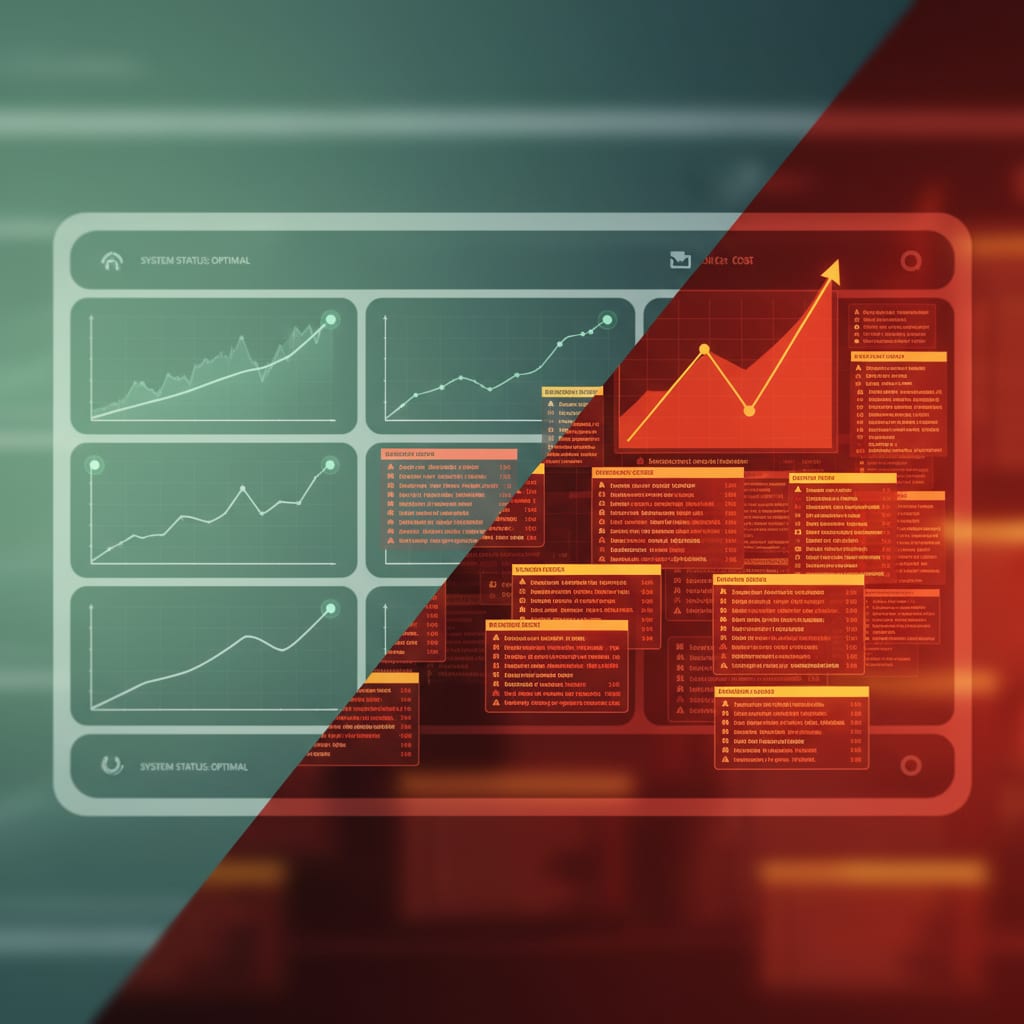
Your team just spent three months prototyping with LangChain. The demo is slick, investors are nodding, and the sprint review was pure buzz. Then you hit production: API timeouts. Rogue loops.
Somewhere in the US, an engineering team is busy explaining why their $47,000 OpenAI bill came from a recursive chain that ran wild for 11 days–with no termination logic. That"s not bad luck. That"s architecture.
According to LangChain"s own State of Agent Engineering Report (n=1,340, Nov–Dec 2025), 45% of developers test LangChain but never deploy it in production. Another 23% rip it out after deploying. Imagine McDonald"s publishing a study titled, "30% of our customers prefer to eat elsewhere"–and you realize the number is absolutely real, because it"s straight from their own data.
But here"s the thing: The real question isn"t "LangChain or LlamaIndex?" It"s "Which stack actually survives your first real customer?"
TL;DR: The Numbers No One Wants to See
According to the LangChain State of Agent Engineering 2025 report, a significant number of teams face challenges with popular AI frameworks. Specifically, 45% of teams never deploy LangChain in production, and an additional 23% remove it after deployment. This means nearly two out of three teams who try LangChain ultimately walk away from it.
The data suggests a promising hybrid stack for 2026: LlamaIndex for the knowledge layer, LangGraph for orchestration, and Langfuse for observability. This combination appears to outperform single-framework solutions for production use, importantly, without causing vendor lock-in. However, custom builds present a different challenge, potentially consuming 3–6 months of engineering time just to get a single agent production-ready. For teams with fewer than five LLM engineers, this custom approach is often a costly endeavor.
Furthermore, cost overruns are a significant concern. According to AICosts.ai, 87% of all agent cost overruns occur due to overlooked hard limits, rather than the choice of model. The impact of framework choices on financial performance is direct: LangChain"s memory wrapper can add over a full second of latency per API call, and inefficient context management can double or triple token costs. Security is also a critical consideration; the CVE-2025-68664 "LangGrinch" vulnerability in langchain-core highlights that framework selection is not just about features but also about real-world security.
Why This Decision Is More Expensive Than You Think
Imagine you"re the CTO weighing frameworks. Most comparison posts obsess over feature lists. But that"s the wrong starting point. The real question is: What happens when your agent is live and nobody"s watching?
Here"s a chilling stat: According to AICosts.ai, 73% of teams have no real-time cost tracking for their AI agents. The average cost overrun versus original estimates? Not 40%. Not 100%. 340%.
Let that sink in for a second. That means your projected $10k run budget could balloon to $44k without anyone noticing–until the invoice lands.
Jason Calacanis shared on X how his team ended up paying $300 per day per agent at just 10–20% capacity using Claude"s API. That"s about $100,000 a year, per agent. And this isn"t some freak case: agents quietly burn tokens all day thanks to bloated context windows, memory wrapper overhead, and missing termination logic.
Here"s the kicker: 87% of agent cost disasters stem from excessive autonomy–meaning, no hard limits. It"s not about bad models or prompts. It"s about letting your agent run free without a leash.
Runaway agents aren"t a rare bug. They"re the default if your infrastructure doesn"t enforce boundaries. This "demo-to-production gap" doesn"t show up at the model layer. It"s your infrastructure: retry logic, rate limiting, context budget enforcement, multi-tenant isolation, audit trails. LangChain and similar frameworks leave these as your problem. And that"s where your real costs start stacking up.
Ready to see where each framework stands in this mess? Let"s break it down.
Should You Still Pick LangChain for New AI Projects in 2026?
Let"s be real. For prototypes, LangChain is fantastic. But for production systems? Tread carefully.
LangChain"s abstractions make debugging a nightmare and add over a second of latency due to the memory wrapper. If you care about reliability, you"re better off starting with LangGraph–the subproject that"s architecturally superior to LangChain itself.
LangChain in 2026: The Fastest Prototype, the Riskiest Production Bet
LangChain was built in 2022 for rapid LLM prototyping–and it"s never shed that DNA.
Where LangChain Shines
Want to whip up a notebook experiment at 11pm? LangChain"s your tool. It"s got a huge ecosystem, plenty of integrations, and the AgentExecutor just makes sense. The community docs are deep. This ease is precisely why 45% of teams try it.
But that"s also why 45% never launch with it.
Where LangChain Falls Flat in Production
Those handy abstractions that help you prototype? They explode your debugging workload in production.
- Memory Wrapper Overhead: LangChain"s memory wrapper adds more than 1 second of latency per API call. That"s 10,000 seconds wasted per day if you"re handling 10,000 tasks. If you promise 2-second response times, this could be the difference between "good enough" and "no-go."
- Context Bloat: As @polydao put it on X: "Most agents waste 2–3x the tokens by injecting bootstrap files into every context." It"s not an edge case–it"s the default in poorly configured chains.
- Non-Determinism + No Observability: What works on your laptop won"t behave the same in production. Latencies change, retries compound, requests run in parallel. LangChain doesn"t offer built-in step-level tracing. LangSmith is a bolt-on, not a core feature.
- Framework Lock-In: Teams that invest a year into LangChain end up stuck on chain versions that can"t be migrated without a rewrite. Reddit sums it up:
"Once we removed LangChain, we could just code again. Not being locked into the framework made our team way more productive."
–r/LangChain
CVE-2025-68664 "LangGrinch": When the Framework IS the Vulnerability
This isn"t some footnote. It"s a headline.
CVE-2025-68664, nicknamed "LangGrinch" by the security crowd, is a severe security flaw in langchain-core: secret exfiltration via serialization injection. With the right payload, an attacker could siphon off your environment"s API keys, tokens, and credentials.
According to CodeRabbit (Dec 2025), AI-generated code has 2.74 times more vulnerabilities than hand-written code. And when your framework itself has a critical CVE–and encourages developers to gloss over security details–that"s not an abstract risk. If you"re stuck with GDPR or BSI-Grundschutz compliance, this is a serious strike against putting LangChain in your production stack.
Don"t confuse LangGraph with LangChain. LangGraph is a subproject that uses typed state machines instead of free-form agent loops. It"s vastly better for production. You can–and should–use LangGraph independently.
What"s the Real Difference Between LangChain and LlamaIndex?
Here"s the short version: LangChain is a general-purpose framework for AI agents and chains–great for prototyping, not great for production. LlamaIndex is specialized for knowledge layers and Retrieval-Augmented Generation (RAG)–excellent for document indexing and structured retrieval, weaker at complex agent orchestration.
Let"s unpack that.
LlamaIndex: The Underrated RAG Specialist
Ever notice how comparison articles paint LlamaIndex as a "LangChain alternative?" That"s a category error.
LlamaIndex is, first and foremost, a knowledge-layer framework–think indexing, chunking, hybrid search, and structured retrieval over docs and data.
Where LlamaIndex Beats LangChain
If you care about query transformations, hybrid search, or pulling structured outputs from documents, LlamaIndex wins. When your main pain is getting precise info from a sea of docs, LlamaIndex outperforms LangChain"s retrieval abstraction.
By 2025, LlamaIndex has doubled down on "workflows," letting it act as a valid orchestrator for document-heavy use cases. Legal tech scanning contracts? SaaS product searching customer docs? LlamaIndex is the obvious choice.
Where LlamaIndex Hits Its Limits
The minute you need complex agent orchestration–think multiple tools, feedback loops, or state management–LlamaIndex gets awkward fast. It simply wasn"t built for agentic workflows with parallel tool calls, branching logic, or robust error recovery.
So before you pick a framework, ask yourself:
Is your core problem RAG quality or agent orchestration?
That single answer determines 80% of your stack decision. Pick LlamaIndex for the former, LangGraph for the latter.
And since cost always matters: A markaicode.com study (2026) found CrewAI–a similar orchestration framework–burns 56% more tokens per request than LangGraph. Structured branching cuts token usage by about 28%. So your framework isn"t just about engineering speed–it hits your bottom line, too.
SwiftRun automates repetitive workflows with AI agents – so your team can focus on what matters.
When Should You Build Your Own AI Stack?
Let"s cut through the wishful thinking. A custom implementation makes sense only if:
- Compliance rules out any standard framework,
- Your team has more than 5 engineers with real LLM experience,
- You have extreme performance SLAs.
For nearly all teams under 50 people, the infrastructure cost (3–6 months to production-ready) far outweighs any benefit.
What "Custom Build" Actually Means
"We"ll just do it ourselves, straight to the API." Sounds easy, right? It isn"t.
The Hidden Checklist: What You Really Have to Build
Direct LLM API calls are fine for toy cases. But for production? Here"s the bare minimum you need to ship:
- Retry logic with exponential backoff: API timeouts are real, especially with parallel agents.
- Rate limiting and token budget enforcement: No hard limits means a single bug can nuke your entire token budget.
- Context window management: Who decides what goes into context, in what order, and what gets trimmed?
- Multi-tenant isolation: Customer A should never, ever see Customer B"s data. Not a nice-to-have–a legal mandate.
- LLM tracing and audit trails: What exactly did the agent do? Which tool calls, in what order?
- Secret management: API keys in a distributed agent system are a security headache all their own.
- Eval pipeline for regression testing: Even LangGraph"s own Academy now teaches "Building Reliable Agents"–a quiet admission that almost nobody gets this right.
And that"s just the essentials. You"ll need more.
The Realistic Timeline
According to the Composio 2025 AI Agent Report, a whopping 95% of enterprise GenAI pilots never make it to production. The main reason? Infrastructure work really starts after the prototype–not before.
Gartner predicts 40% of all agentic AI projects will be abandoned by 2027 due to reliability concerns. It"s not about bad teams–it"s about teams underestimating infra complexity until it"s too late.
And then there"s the METR study (July 2025): developers using AI tools took 19% longer than those who didn"t–but thought they were 20% faster. Perception gap, meet reality.
When Custom Code Is Actually Worth It
There are valid cases:
- Compliance demands it. If you need full BSI-Grundschutz + GDPR, and can"t have a third-party framework in your supply chain.
- Extreme SLAs. If a 200ms response time isn"t a wish–it"s a contractual obligation.
- A team of 5+ experienced LLM engineers. If you truly have the infra muscle.
But for a typical sub-50-person startup with a first AI project and a moving roadmap? It"s almost never worth it.
The 5 Real CTO Decision Criteria (With Hard Thresholds)
Forget the usual "pros and cons." The most ignored–but crucial–question is:
Are you trying to understand and retrieve documents, or orchestrate multiple tools and make decisions?
That answers 80% of your stack choice.
Here"s the table you actually need:
| Criterion | LangChain All-In | Hybrid Stack (LlamaIndex + LangGraph + Langfuse) | Custom Implementation |
|---|---|---|---|
| 1. RAG Quality | 🟡 Medium – Retrieval abstraction, but not optimized | 🟢 High – LlamaIndex is built for this | 🟡 Medium – doable, but expensive to build |
| 2. Team Size / LLM Experience | 🟢 Good for ≤3 engineers – low entry barrier | 🟡 Ideal for 3–6 engineers – higher learning curve, stable foundation | 🔴 Only for >5 engineers with LLMOps experience |
| 3. Compliance / GDPR | 🟡 Self-hosting possible, but mind CVE history | 🟢 Langfuse self-hosted is GDPR-compliant; LangGraph no cloud lock-in | 🟢 Full control–only option for BSI-Grundschutz requirements |
| 4. Time-to-Market | 🟢 Prototype in 1–2 weeks | 🟡 Stable prototype in 3–4 weeks; prod in 3 months | 🔴 Production-ready in 6+ months |
| 5. Token Budget / Cost | 🔴 >1s latency due to memory wrapper; context bloat at scale | 🟢 LangGraph branching saves ~28% tokens; Langfuse gives cost transparency | 🟡 Full control, but initial overhead costs eng time |
Thresholds that matter:
- <10,000 tasks/day: Framework overhead is negligible, speed wins.
- >10,000 tasks/day: Token overhead and latency become real cost issues.
- Team <3 LLM engineers: You need a framework–custom or hybrid isn"t realistic.
- Team >5 with production LLM experience: Custom or hybrid are both viable.
Context management is rarely covered in framework comparisons. @koylanai on X describes a "layered context architecture" for agents to avoid redundancy in production. No framework does this out-of-the-box–you have to build it.
What"s the Best AI Agent Framework Stack for Production in 2026?
Here"s what the data (and the pain) says: The most reliable stack combines LlamaIndex (knowledge layer: indexing and RAG), LangGraph (orchestration: typed state machines), and Langfuse (observability: open-source, self-hosted).
This approach dodges lock-in and lets each tool play to its strengths.
The Hybrid Stack: Why "Neither" Is the Best Answer for 2026
Let"s get honest–no vendor will ever tell you this, because it"s not in their interest. LangChain will always pitch LangChain. LlamaIndex will always pitch LlamaIndex. Nobody makes money telling you: "Combine both, then add a third tool."
So I"ll say it.
LlamaIndex + LangGraph + Langfuse: Why This Actually Works
- LlamaIndex as Knowledge Layer: Handles indexing, chunking, hybrid search, and structured retrieval. It does exactly what it was designed for–and does it better than LangChain"s retrieval abstraction.
- LangGraph as Orchestration Layer: LangGraph is LangChain"s own admission that state machines beat free agent loops. A state machine graph models your agent"s state, allowed transitions, and, crucially, termination conditions. It"s more deterministic than "ReAct" loops, and you can actually trace what went wrong.
- Langfuse for Observability: Open source, GDPR-compliant, self-hostable, and does real LLM tracing. Langfuse gives you granular step traces, cost attribution per run, and an eval pipeline for regression testing. It"s the governance and audit trail you simply don"t get from frameworks.
No governance vacuum. No shadow AI risk from agents running wild. No "we only noticed when the customer tweeted."
Architecture Example
User Request
  ↓
LangGraph State Machine (Orchestration)
  ├── Tool Call 1: LlamaIndex Query (RAG over docs)
  ├── Tool Call 2: External API
  ├── Tool Call 3: Further processing
  └── Termination condition (Hard limit: max 10 steps)
  ↓
  LLM Response
  ↓
  Langfuse Trace (every step tracked: tokens, latency, cost)
  ↓
  Output to user
Hard limits are built in–not tacked on. Every step is traceable. Termination logic is explicit–no more 11-day runaway loops.
One Honest Downside
Here"s what you won"t hear elsewhere: The hybrid stack is more complex to learn than LangChain alone. Juniors now need to know three frameworks, not one. If your team"s just getting started with AI agents, expect a real learning curve.
But the flip side matters more: If you go to production with LangChain and then realize you need to migrate, you"ll pay the learning curve twice–once for LangChain, once for the switch.
If you"re worried about compliance and won"t trust LangGraph: you"re not wrong. BSI-Grundschutz can mean no external frameworks in your supply chain. In that case, custom code is your only valid move–with all the costs that come with it.
SwiftRun.ai is built on the hybrid stack principle: LLM orchestration, observability, and hard limits are built in–not hacked on after the fact. If you don"t want to assemble this stack yourself, check out how SwiftRun does it.
12-Month TCO Comparison: What Does Each Path Really Cost?
Here are the assumptions: 10,000 tasks/day, six-person team, 12 months, senior engineering rate in DACH ~€80/hr, model: claude-sonnet-4-6 (Anthropic). These are best estimates based on published prices and community experience, not guaranteed numbers.
| Cost Category | LangChain All-In | Hybrid Stack | Custom Implementation |
|---|---|---|---|
| Setup / Initial Effort | ~€8,000 (2 weeks) | ~€16,000 (4 weeks) | ~€80,000 (6 months) |
| Ongoing Maintenance | ~€4,000/month (debugging, version updates) | ~€2,000/month | ~€6,000/month (all infra layers) |
| Token Overhead | +40–60% (memory wrapper + context bloat) | Baseline (~0%) | Depends on implementation quality |
| Monitoring Tools | ~€500/month (LangSmith) | ~€200/month (Langfuse self-hosted) | ~€800/month (custom + 3rd-party) |
| Debugging Time | High – abstraction overhead clouds errors | Medium – LangGraph states are traceable | Low if well-implemented; high during setup |
| Total 12-Month Cost | ~€120,000–160,000 | ~€95,000–120,000 | ~€200,000–300,000 |
Wildcard: Prompt Caching.
Almost nobody mentions this–but it matters. Anthropic offers prompt caching, which can cut input token costs by up to 90% for repeated system prompts. If your agent runs 10,000 daily tasks with the same prompt, this is the single biggest cost lever–way more than framework choice.
If you"re not using prompt caching and still griping about framework costs, you"re missing the forest for the trees.
@ziwenxu_ on X proved the point: 140 million tokens processed in 48 hours–API bill was $1,677, actual cost $50, thanks to caching and self-hosting. That"s not a one-off, that"s context engineering in action.
The METR study tells us something else: If developers using AI tools actually take 19% longer–but think they"re 20% faster–then engineering hour estimates for AI infra are systematically too optimistic. Build in a buffer.
When Should You Switch Away from LangChain?
When does it make sense to bail on LangChain for something else? Here are the hard triggers–not "if it feels slow," but real thresholds:
Warning Sign 1: Debug time eats >30% of your sprint capacity.
If your team spends more energy reverse-engineering LangChain than building business logic, you"ve got a problem. The AgentExecutor abstraction makes it hard to pinpoint why a step failed–because the abstraction itself hides the error.
Warning Sign 2: No granular step-level traces.
"Something took 4 seconds" isn"t observability. If you can"t see, at the step level, which tool call burned tokens or which step killed your latency, you can"t debug production. No audit trail also means no compliance proof.
Warning Sign 3: You"re stuck on chain versions you can"t migrate.
This is lock-in at its worst. If updating LangChain means rewriting core parts of your system, you"re basically in legacy jail. It"s like running jQuery 1.7: still works, but every new feature is a new headache.
Warning Sign 4: Token costs scale non-linearly with requests.
Context bloat means double the requests, triple the token bill. If your per-request costs rise faster than your traffic, you"ve got a context management problem–often caused by LangChain wrappers.
Warning Sign 5: You can"t tie production errors to specific chain steps.
Silent failures and silent quality degradation are the most dangerous production bugs: HTTP 200 OK, but the output is wrong. Your dashboard is green, your customer is fuming. Standard monitoring never catches this.
Migration Path: Don"t Big-Bang Rewrite
The most common mistake in LangChain migrations? Teams try to rewrite everything at once. It"s costly, risky, and often fails.
A better approach: Write all new feature code directly in LangGraph. Isolate old LangChain code; don"t touch it. Migrate step by step. After 3–4 sprints, your LangChain footprint often shrinks to almost nothing–without a monster migration sprint that steals business value.
"Saw another agentic AI project fail last week. Same mistake every time. Over 40% of these projects don"t fail because of the models–they fail because of bad architecture."
–@rohit4verse on X
That"s the honest summary of the demo-to-production gap.
What You Should Actually Do Next
Three questions for your next architecture decision:
- 1. What"s your main problem? If it"s RAG quality, use LlamaIndex. If it"s agent orchestration, use LangGraph. If it"s both, go hybrid.
- 2. Do you have hard limits built in–or are you "planning to add them later"? "Later" usually arrives as an unexpected invoice. 87% of cost overruns happen because you forgot hard limits. This is an architecture call, not a framework bug.
- 3. Can you trace every production error to a specific agent step? If not, it"s not just an observability problem–it"s a governance vacuum. Shadow AI doesn"t happen because teams are malicious. It happens because nobody knows what the agents are up to.
The community is split on whether LangChain is helpful or harmful in production. LangChain itself is now building production tools like LangSmith and LangGraph–because the criticism is real, not just marketing fluff. If you"re starting fresh: use LangGraph, not LangChain. The subproject is better than the original.
And if you don"t want to assemble the hybrid stack (LlamaIndex + LangGraph + Langfuse) yourself:
See [How to Integrate RAG Properly in Agent Pipelines] or [AI Agent Platform vs Direct API] for practical implementation details.
That $47,000 bill wasn"t bad luck. It was architecture.
Yours is still in your hands.
Want to go deeper?
Check out: [What Is Vendor Lock-in in AI Platforms–and How Do You Dodge It?]
Checklist: What to Audit Before You Ship Another AI Agent
- Are hard limits enforced on every agent loop and tool call?
- Is there real-time, step-level cost tracking?
- Can you trace every production error to its agent step?
- Is context window management explicit and redundant-free?
- Are you using prompt caching for repeated system prompts?
- Does your stack support GDPR/BSI compliance if you need it?
Ready to build something that actually survives production? The stack is yours to choose.
Definitions used in this article:
- RAG (Retrieval-Augmented Generation): AI technique combining document retrieval with language model generation to answer questions based on external data.
- State Machine: A computational model that defines a finite set of states and transitions, often used to control agent behavior deterministically.
References
- LangChain State of Agent Engineering Report (2025)
- LangGrinch CVE-2025-68664
- AICosts.ai: AI Agent Cost Crisis
- METR Study (July 2025)
- Markaicode.com: Multi-agent production comparison
- Composio 2025 AI Agent Report
- @ziwenxu_ on X
- @polydao on X
- @koylanai on X
- @rohit4verse on X
Author: Georg Singer
Related Articles:
- How Can You Deploy AI Agents Securely and Stay GDPR-Compliant?
- How Much Does It Really Cost to Run an AI Agent That Handles 10,000 Tasks a Day?
- Self-hosted vs Cloud AI Agent Platforms: Which Is Safer for Your Company Data?
Ready to unlock your AI potential without the headache of choosing the right framework? Check out SwiftRun.ai to accelerate your LLM development.
LangChain vs LlamaIndex CTO decisionLangChain productionAI framework comparison 2026LangGraph productioncustom LLM implementation
Related Articles
AI Builders & CTOs
Connect AI Agent to Internal Database Securely
Anthropic"s official PostgreSQL-MCP server had a SQL injection flaw. Here are five architectural moves to protect any AI agent with database access–so you"re not the next incident headline.
May 28, 2026·14 min read·Georg Singer
AI Builders & CTOs
AI Automations for SaaS: High ROI for Small Teams
Most SaaS teams see zero ROI from GenAI–not because AI itself fails, but because they automate the wrong processes. Only four automation types have proven financial impact. Everything else is just burning budget.
May 23, 2026·21 min read·Georg Singer

AI Builders & CTOs
What Does a Self-Hosted AI Agent Platform Really Cost Each Month?
Server bills for self-hosted AI agent platforms can be as low as €35 or as high as €1,400 per month–but the real costs are 5x to 10x higher once you add engineering time. If you only compare server invoices, you're missing the true picture. Here"s a detailed breakdown, TCO calculation, and...
May 22, 2026·21 min read·Georg Singer