SaaS GTM Misalignment: The Revenue Killer, More Meetings Make It Worse
GTM misalignment is the #1 reason B2B SaaS companies miss revenue targets, yet most treat it as a communication issue. Discover why it's an ops problem costing you 7% of ARR–and how to fix it before your pipeline bleeds dry.
Georg Singer··17 min read

You just shipped a killer feature. The product team spent six weeks getting it live. But here's the kicker: sales has no updated pitch. Customer success doesn't even know it exists.
Meanwhile, three deals–where this exact feature would have sealed the contract–are closing right now with the old deck… or, worse, not closing at all.
That"s what GTM misalignment looks like. Not in a strategy doc, but right inside your revenue pipeline.
The Core Problem: Why GTM Misalignment Is Costing You (and It's Not What You Think)
Ever wonder why your SaaS company is missing revenue targets–even when your product is solid, pricing is competitive, and you"re spending plenty on growth? Here"s a wakeup call.
Forrester predicts that by 2025, GTM misalignment will be the #1 reason B2B SaaS companies miss revenue goals. Not product quality, not price, not budget.
But it gets worse. According to the Freshworks Cost of Complexity Report 2025, software complexity–the root driver of misalignment–burns through an average of 7% of annual revenue. For a SaaS business with €2M ARR, that"s €140,000 down the drain each year.
Let that sink in: that's not just "inefficiency." That"s a six-figure hole in your pipeline, every year, that most teams never see coming.
But here"s the twist: most companies treat GTM misalignment as a "communication issue." They throw more meetings at it. But the real problem is structural–a deep ops flaw that bleeds revenue right where it hurts most: your live deals.
So why does this keep happening? Let"s break it down–and see how you can spot (and fix) the root cause before your CFO notices the missing ARR.
What Exactly Is GTM Misalignment? (And Why Your Strategy Isn"t Enough)
Picture this: product, marketing, and sales all working hard… but on slightly different timelines, measuring their own metrics, and using data that doesn"t sync up. Features get built but never pitched. Promises get made but never delivered. Target audiences drift out of focus because each team interprets the plan their own way.
That"s GTM misalignment. It"s not just sloppy execution–it"s a structural disconnect between the three core functions of a SaaS company.
Definition: GTM (Go-To-Market) misalignment is the structural gap between product, marketing, and sales in a SaaS org: each runs on different planning cycles, tracks different KPIs, and often works from separate (sometimes conflicting) data sources. The result? Features get built but not marketed, marketed but not delivered, or pitched to the wrong customer. You see the damage right in your revenue curve.
Here"s the key: misalignment is NOT the absence of a GTM strategy. You can have a solid plan on paper. But if each team "executes" it in isolation–on their own timeline, with their own priorities–you end up pulling in three directions at once.
Forrester"s 2025 research is crystal clear: it"s not product quality or pricing that kills SaaS revenue. It"s the gap between what you build, what you communicate, and what you actually sell.
Sound exaggerated? Peek under the hood at any 20-200 person SaaS org and you"ll see: this isn"t the exception–it"s the norm.
Let"s clarify three concepts so you can spot the difference:
- GTM Strategy: The plan–target audience, promise, channels.
- GTM Execution: How the plan happens–campaigns, sales decks, onboarding.
- GTM Misalignment: The drift that happens when strategy and execution go out of sync–because each function runs on their own cycle and pursues their own goals.
But where does this gap actually come from? And why do meetings never solve it? Let"s dive deeper.
Where GTM Misalignment Starts (And Why More Meetings Make It Worse)
Three Teams, Three Clocks: The Structural Root of the Problem
Imagine running a three-legged race where each leg is moving at a different speed.
- Product works in sprints–usually two weeks.
- Marketing plans in campaigns–four to eight weeks.
- Sales thinks in quarters.
Three timelines, zero natural overlap. No wonder things fall through the cracks.
But it"s not just about time. Each team optimizes for its own success metrics:
- Product cares about velocity and ship rate.
- Marketing is eyeing MQLs and pipeline influence.
- Sales is all about ARR and quota attainment.
No one has a built-in incentive to slow down for the others. So when product ships a new feature, they might just drop a note in Slack. Marketing might see it–eventually. Sales? Maybe in the next all-hands. Customer success? Not until the first support tickets hit.
How much time does this cost you? According to ProProfs Workflow Automation Statistics, half of all ops teams already spend at least a full workday every month just manually merging project status info. That"s called "alignment overhead"–and it grows with every new team member.
But that"s only the tip of the iceberg. Asana"s Anatomy of Work Index found that 60% of knowledge workers" time is spent on "work about work"–status updates, app switching, manual info gathering. Only 27% of time is spent on actual skilled work. GTM alignment without a structured process? That"s "work about work" at its purest. Your ops team becomes a status-collector, not an alignment engine.
And there"s another twist: tool sprawl. SaaS ops teams with 50-200 employees juggle an average of 87 different tools (saasoperations.com). Worse, Spendflo reports 87% of companies say SaaS sprawl has a "moderate to severe" financial impact. This isn"t just a communication problem–it"s a systemic result of tool fragmentation.
Just how bad does context-switching get? The Lokalise Tool Fatigue Productivity Report 2025 says employees switch between apps 33 times a day on average. Each switch is a chance for info to get lost. Your new-feature Slack message? Gone, buried under notifications–not because your team is careless, but because your system has no reliable channel.
So, if the root is structural, why do teams always try to fix it with more meetings?
Why "Better Meetings" Always Fail (And What You Should Do Instead)
This is the go-to diagnosis after every post-mortem: "We need to communicate better." Cue the weekly GTM sync. Three months later? The problem"s back. Why? Because it was never a communication problem.
Here"s a parallel from agile: Dejan Majkic found that 70-80% of retrospective action items are never actually implemented. The same issues show up sprint after sprint, written by the same people–without structural change. The weekly GTM sync is the same trap: a meeting in place of a process.
Before: Feature released, product posts in Slack, marketing misses it, sales deck isn"t updated, and next week? Three customer calls with outdated info.
After (with a GTM board and ops ownership): Every release triggers a checkpoint. Ops ensures sales enablement materials get updated and marketing syncs before anything is announced externally. No Slack reminders, no "did you see this?"–just a process.
"Feeling overwhelmed by our over-dependence on SaaS." – Reddit user r/SaaS
But the real issue isn"t the number of tools–it"s that none of them systematically connect your functions.
So what does misalignment actually cost you? Let"s do the math.
What GTM Misalignment Really Costs: Revenue, Churn, and Trust on the Line
Direct Revenue Loss: The Price Tag of Bad Alignment
Here"s the bottom line: software complexity–driven by misalignment–costs companies an average of 7% of annual revenue (Freshworks Cost of Complexity Report 2025). More than half of companies (53%) say they didn"t get the expected ROI from their software investments.
For a €2M ARR SaaS? That"s €140,000 a year–lost just because product, marketing, and sales aren"t on the same page.
Spendflo backs this up: 87% of companies say SaaS sprawl is hurting their bottom line. This isn"t just a side issue.
Let"s put numbers on it:
ROI Formula: Quarterly Loss from GTM Misalignment
Misalignment Rate (%) × Avg. Deal Value (€) × Deals per Quarter = Quarterly Loss (€)
Example for a €2M ARR SaaS with a five-person sales team (avg. deal value €8,000, 30 deals per quarter):
| Scenario | Misalignment Rate | Quarterly Loss | Annual Loss |
|---|---|---|---|
| Conservative | 10% | €24,000 | €96,000 |
| Realistic | 20% | €48,000 | €192,000 |
| Aggressive | 30% | €72,000 | €288,000 |
A realistic 20% misalignment rate means every fifth deal is either pitched with outdated info, closed with false promises, or missed entirely because the right feature wasn"t highlighted. That"s €48,000 per quarter walking out the door.
Imagine explaining that to your CFO. Nobody would write this off as a "communication problem"–not when you can see the money.
But ops teams aren"t immune. Plaky PM Statistics 2026 report 75% of project managers are asked to do too much with too few resources. GTM alignment without automation? Just another task on an already overflowing plate.
Indirect Costs: Churn, Longer Sales Cycles, and Hidden Onboarding Work
Direct deal losses hurt. But the invisible costs can be even nastier.
Churn at Month 3: Deals closed on features that don"t exist (or don"t work as promised). Customers don"t churn because your product is bad–they churn because reality didn"t match the sales pitch. Most won"t tell you; they"ll just leave.
Longer Sales Cycles: Sales has to scramble when demos show features that have changed or been renamed. Every round of corrections eats time–and erodes trust.
Onboarding Rework: Customer success has to explain why onboarding isn"t what the sales materials promised. This doesn"t show up in your GTM misalignment metrics–it just burns CS capacity and morale.
Asana found that knowledge workers estimate they could reclaim 4.9 hours per week with better processes–that"s over six weeks a year. A huge chunk of that time is lost to these reactive fire drills caused by bad GTM alignment.
Now, let"s get specific: there"s not just one kind of misalignment. There are three–and one is way more expensive than the others.
SwiftRun automates repetitive workflows with AI agents – so your team can focus on what matters.
The Three Types of GTM Misalignment (and Which One Will Kill Your Revenue Fastest)
Not all GTM misalignment is created equal. In fact, there are three structurally different types–each with its own warning signs, costs, and ops playbook. Miss this distinction and you"ll just treat symptoms, not root causes.
GTM pipeline refers to the structured process that ensures every product change gets translated into sales enablement, marketing messaging, and customer success briefings–before it hits the outside world.
Let"s break each type down.
Type 1: Feature-Message Gap
Product ships new features. Marketing doesn"t hear about them in time. Sales doesn"t pitch them, because they"re missing from the deck. The customer buys–without ever seeing the real value.
This is the most common (and easiest to fix) type. It"s not malice; it"s just mismatched planning cycles: product runs two-week sprints, marketing plans monthly campaigns. Without a structured checkpoint between sprint close and sales enablement, the feature-message gap is the default, not the exception. That means expansion revenue gets left on the table–over and over.
Type 2: Roadmap-Promise Gap
Sales promises features that product hasn"t prioritized–or that won"t ship in the way they"re pitched. This isn"t carelessness; it"s quota pressure. A prospect asks for a feature. "It"s coming later this year" sounds reasonable in the moment–and becomes the customer"s buying reason.
This is the most expensive type, because you"re actively setting expectations. Churn follows–usually by Month 3, sometimes sooner. But in the exit call, customers rarely say "you broke your promise." They say, "the product just isn"t a fit." The damage is recorded, but the root cause vanishes into the fog.
Why won"t this ever go away on its own? Unless you have a formal rule banning sales from pitching roadmap items without ops approval and product signoff, type 2 will keep cropping up. It"s a system problem, not a people problem–a predictable outcome of incentivizing sales on deals closed, not deals retained.
Type 3: ICP-Drift Gap
Your real target audience has shifted–maybe because of new customers, market changes, or product evolution. But your messaging and positioning haven"t caught up.
This is the stealthiest type. It only shows up in cohort analysis after six months or more, when certain customer segments start churning at higher rates. And then? No one really knows why. Sales hasn"t flagged anything weird. CS has a few scattered notes. Product never re-examined the target audience.
Profisee found 37% of companies don"t have a single source of truth for data. Without it, diagnosing this type is nearly impossible–every function is working from different data, and no one sees the full picture. The ICP-drift gap is a data problem: it appears the moment sales, CS, and product usage data are siloed in three systems and no one pulls the overlap.
Decision Matrix: Which Misalignment Type Are You Facing?
| Type | Diagnosis Signal | Main Costs | Ops Countermeasure | Time to Impact |
|---|---|---|---|---|
| Feature-Message Gap | Sales deck has outdated feature info; customers miss new features | Lost expansion revenue, weak demo conversion | Release notes ➔ mandatory sales enablement checkpoint pre-launch | 2–4 weeks |
| Roadmap-Promise Gap | Churn comments reference promised but undelivered features | High early churn, broken trust | Sales can"t pitch roadmap items without ops + product signoff | Immediate (stop promises) |
| ICP-Drift Gap | Certain customer segments churn faster; more onboarding drop-offs | Slow, hard-to-track ARR loss | Quarterly ICP review with unified sales, CS, and product data | 6–12 weeks |
Mini Case Study: All Three Types at Once
A 40-person B2B SaaS (anonymized) faced this triple whammy in a single quarter:
- Product built a new integration over three sprints–marketing never heard, so it never showed up in campaigns (feature-message gap).
- Sales promised a mobile app for Q3–product hadn"t prioritized it (roadmap-promise gap).
- Main buyers shifted from mid-market to SMB–messaging was still aimed at enterprise (ICP-drift gap).
Result? 23% churn the next quarter. Root cause analysis took three weeks–because there was no shared data. Each team had a different explanation, and all were partly right.
⚠️ Warning: Quarterly Business Reviews won"t catch any of these. QBRs look backward. Misalignment happens at sprint speed–every two weeks. By the time you review the quarter, the damage is done.
Now you know what to watch for. But how do you spot misalignment before it sinks your quarter?
The 5 Warning Signs: How to Detect GTM Misalignment Early (Before You Lose Revenue)
Here"s the good news: spotting GTM misalignment doesn"t require new tools. You already have the data–in your sales decks, support queue, onboarding stats, and ICP definitions.
GTM Misalignment Checklist
- Outdated feature descriptions in the sales deck: Does your current deck list features that changed or were renamed in the last release? If sales materials and product releases aren"t in sync, you"ve got a problem.
- Onboarding drop-offs spike in a customer segment: If CS reports that one type of customer is bailing in the first 60 days, chances are that"s an ICP drift–not a product flaw.
- Support tickets reference promised-but-undelivered features: "When is Feature X coming?" isn"t a support issue–it"s a roadmap-promise gap.
- Sales and product define the ideal customer differently: Ask both teams, separately: "Who"s our ideal customer?" If answers differ by 20%+, your ICP drift has already started.
- Stakeholder updates are gut-feel, not data-driven: If your ops PM has to manually ping three teams for status before the management meeting–instead of pulling from a shared data source–the GTM pipeline checkpoint is missing. Don"t dismiss this as an edge case. In companies without a single source of truth, this is business as usual.
The Lokalise Tool Fatigue Productivity Report 2025 explains why: 33 app switches per employee per day. Info that isn"t systematically pushed gets lost in the shuffle–not because people are lazy, but because the system isn"t built for reliable handoffs.
Ready to get proactive? Here"s how ops teams can prevent misalignment–not just manage it.
How Ops Teams Can Eliminate GTM Misalignment–For Good
Who owns GTM alignment? Here"s the uncomfortable answer: structurally, no one. CPOs focus on the roadmap. CMOs on campaigns. VP Sales on quotas. Coordination falls into a vacuum–so whoever steps up does it manually and reactively.
That"s your cue as ops: step in as the structural gatekeeper. Not the meeting organizer–the owner of the process.
BetterCloud"s State of SaaS 2025 reports 60% of IT teams are buried in manual tasks despite ever-growing tool stacks. GTM alignment is a classic case: the process exists–it"s just manual, reactive, and error-prone.
And the trend is clear. Gartner predicts that by 2026, 40% of enterprise apps will have task-specific AI agents–up from less than 5% in 2025. Teams that still run GTM alignment by hand will be left behind.
The GTM Alignment System: Build a Release-to-GTM Pipeline
Imagine a pipeline that turns every sprint release into a sequence of automatic, cross-team updates–no more "did you hear about this?" moments.
Process Diagram:
Sprint Close
  → Ops Checkpoint (Feature Review + Template Completion)
  → Sales Enablement Update (Deck, Demo Script, Messaging)
  → Marketing Sync (Messaging, Campaigns)
  → CS Briefing (Onboarding, Customer Updates)
  → Green Light for External Comms
Each step is not a meeting–it"s a template with mandatory fields, controlled by ops before anything goes public.
GTM Alignment Template–Required Fields Per Release:
| Field | Owner | Purpose |
|---|---|---|
| Feature Name + Plain-Language Desc. | Product | Common language for all teams |
| Impacted ICP Segments | Product + Marketing | Who benefits most? |
| Changed Positioning | Marketing | What new promise are we making? |
| Sales Messaging | Marketing + Sales | How will sales pitch this? |
| CS Briefing Points | Customer Success | What do existing customers need to know? |
| External Launch Date | Ops | No external comms without ops signoff |
Tool-Neutral Implementation: Works in Notion, Linear, or Jira
This pipeline works in any tool that handles templates and checkpoints.
- A Notion database with release entries and status fields.
- Linear with linked GTM issues per feature release.
- Jira with a dedicated GTM alignment board.
The tool doesn"t matter–explicit ops ownership does.
- No feature makes it into the sales deck until the template is done.
- Sprint cadence (two weeks) sets the rhythm–not the quarter.
- Ops is the only signoff before anything goes public.
"Don"t our OKRs or quarterly reviews solve this?" Nope. OKRs set goals–they don"t sync what gets pitched when, or who finds out first. QBRs look back at past quarters–they can"t prevent ten misaligned sprints from piling up in the meantime. Both are target systems. GTM alignment is an execution challenge with a two-week heartbeat.
SwiftRun.ai automates this release-to-GTM pipeline: Each sprint close triggers sales enablement updates, a marketing sync, and a CS briefing. No manual reminders needed. Curious how it works? Request a demo
GTM Misalignment in Practice: Your Burning Questions Answered
What is GTM misalignment in SaaS?
GTM misalignment means product, marketing, and sales are out of sync. Product ships features sales never hears about. Marketing makes promises product hasn"t prioritized. Sales pitches roadmap items that never ship. The strategy may look great on paper–but the gap between incompatible planning cycles shows up fast, in churn, lost deals, and longer sales cycles.
Why does GTM misalignment happen in SaaS companies?
It"s all about three incompatible rhythms and no synchronization owner. Product runs two-week sprints. Marketing plans months ahead. Sales lives by the quarter. Add to that a tool jungle–ops teams juggle 87 tools on average, none of which connect the dots. Unless ops steps in with a release-to-GTM pipeline, misalignment is the default state.
How much revenue does GTM misalignment really cost?
Freshworks 2025 says software complexity (driven by misalignment) eats up 7% of annual revenue–that"s €140,000 for a €2M ARR SaaS. With a 20% misalignment rate, €8,000 average deal, and 30 deals per quarter, you"re losing €48,000 per quarter. And that"s just the visible loss–add churn from broken promises, longer sales cycles, and CS rework, and the true cost climbs higher.
What are the three types of GTM misalignment?
- Feature-Message Gap: Product ships, marketing doesn"t communicate.
- Roadmap-Promise Gap: Sales promises features product hasn"t committed to (the churn magnet).
- ICP-Drift Gap: Your audience shifts, but messaging and positioning lag behind. Each type has different root causes and needs a different ops fix.
How can ops teams prevent GTM misalignment?
A release-to-GTM pipeline with explicit ops ownership replaces reactive firefighting. Every sprint close runs through a defined ops checkpoint with mandatory fields–plain-language feature description, impacted ICP segments, sales messaging, CS briefing. No feature goes into sales or marketing materials without ops signoff. The sync frequency? Every sprint–two weeks, not the quarter. And it works in Notion, Linear, or Jira.
With the right system, you"ll stop leaving revenue on the table–and start turning every sprint into a pipeline win.
Ready to fix your GTM misalignment and stop revenue leaks? SwiftRun.ai automates your release-to-GTM pipeline. Start free – no credit card required.
gtm misalignment saasgo-to-market alignmentb2b saas revenue lossops pipelineproduct sales alignmentchurnsales enablementtool sprawl
Related Articles

Operations & PM Teams
GTM Misalignment: How to Spot Early Warning Signs in SaaS
GTM misalignment is the #1 reason B2B SaaS companies miss revenue targets, according to Forrester (2025). But Ops PMs see the signals first. Here"s how to recognize, diagnose, and act before the problem hits your bottom line.
Jun 12, 2026·14 min read·Georg Singer

Operations & PM Teams
WIP Limits: Why Ops Teams Ignore Them at Their Peril
23 tasks 'In Progress', only one finished. That"s not bad luck–it"s Little"s Law in action. Here"s why WIP limits are the most important (and ignored) concept for Ops teams drowning in SaaS tools.
Jun 11, 2026·12 min read·Georg Singer
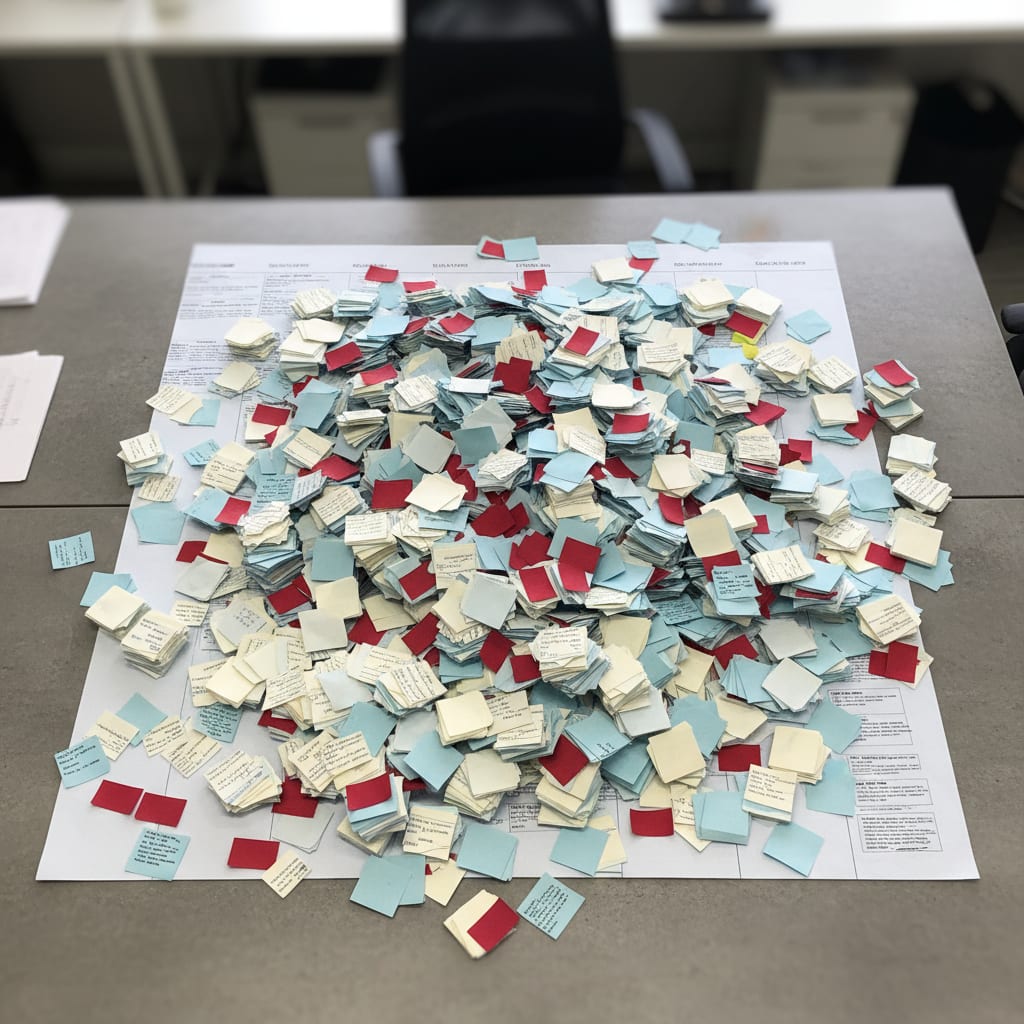
Operations & PM Teams
How to Fix Product and Sales Alignment in SaaS–Without New Tools
Product and Sales misalignment is the #1 reason SaaS revenue targets fail–according to Forrester. It"s a system problem, not a people problem. Here"s a four-part framework to sync Product and GTM, boost adoption, and eliminate wasted launches. No new tools required.
Jun 10, 2026·13 min read·Georg Singer